Category: Newsletter

WordPress Newsletter

  • WordCamp Europe 2025 & WCEU Diversity Scholarship | WPMore – January Issue 2025

    WordCamp Europe 2025 & WCEU Diversity Scholarship | WPMore – January Issue 2025

    Welcome to the first issue of 2025 of WP More.

    Thanks for reading WPMore!! Subscribe for free to receive new posts and support my work.

    Dear WordPress enthusiasts,

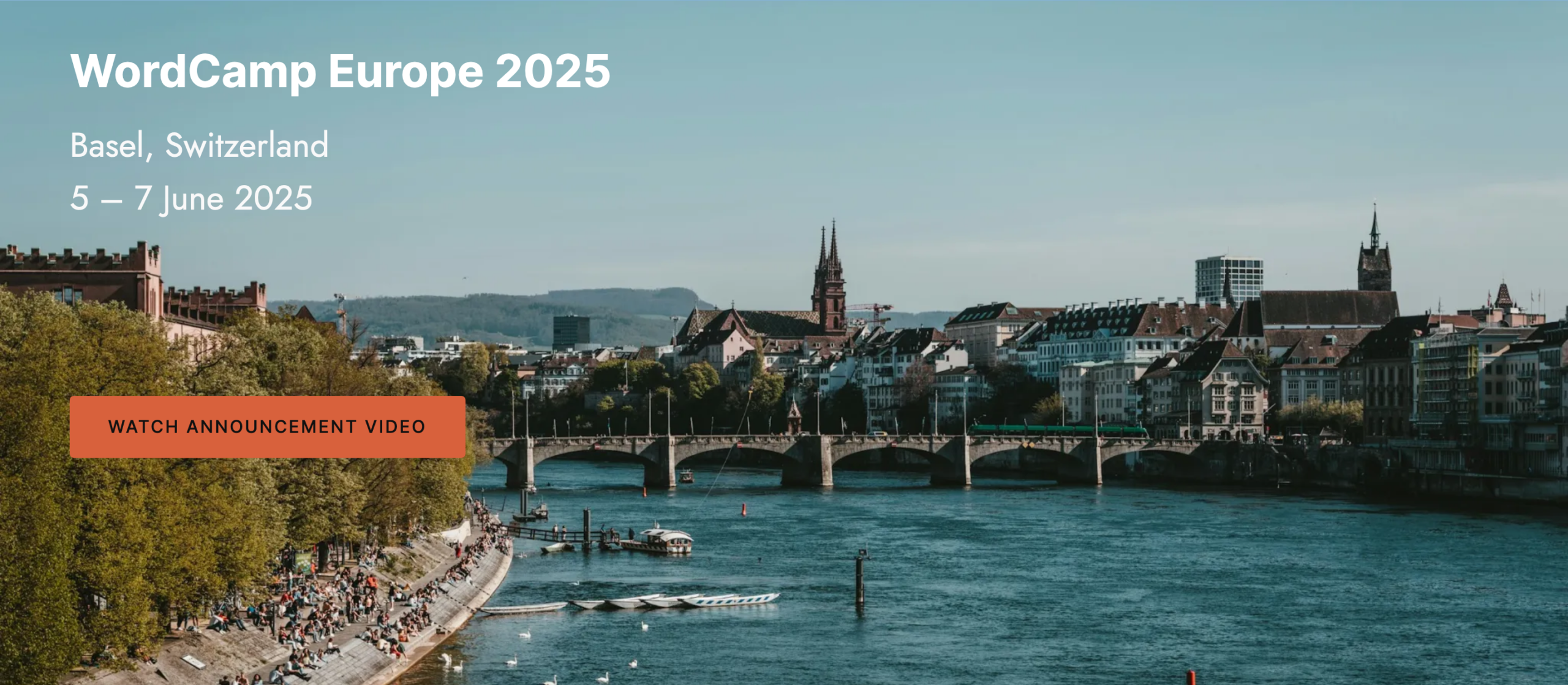
    Welcome to the first WPMore newsletter of 2025! We’ve got exciting updates from the WordPress community, particularly about WordCamp Europe 2025 in Basel. Let’s dive into what’s brewing in the WordPress world.

    WordCamp Europe 2025: Your Ticket to WordPress Excellence

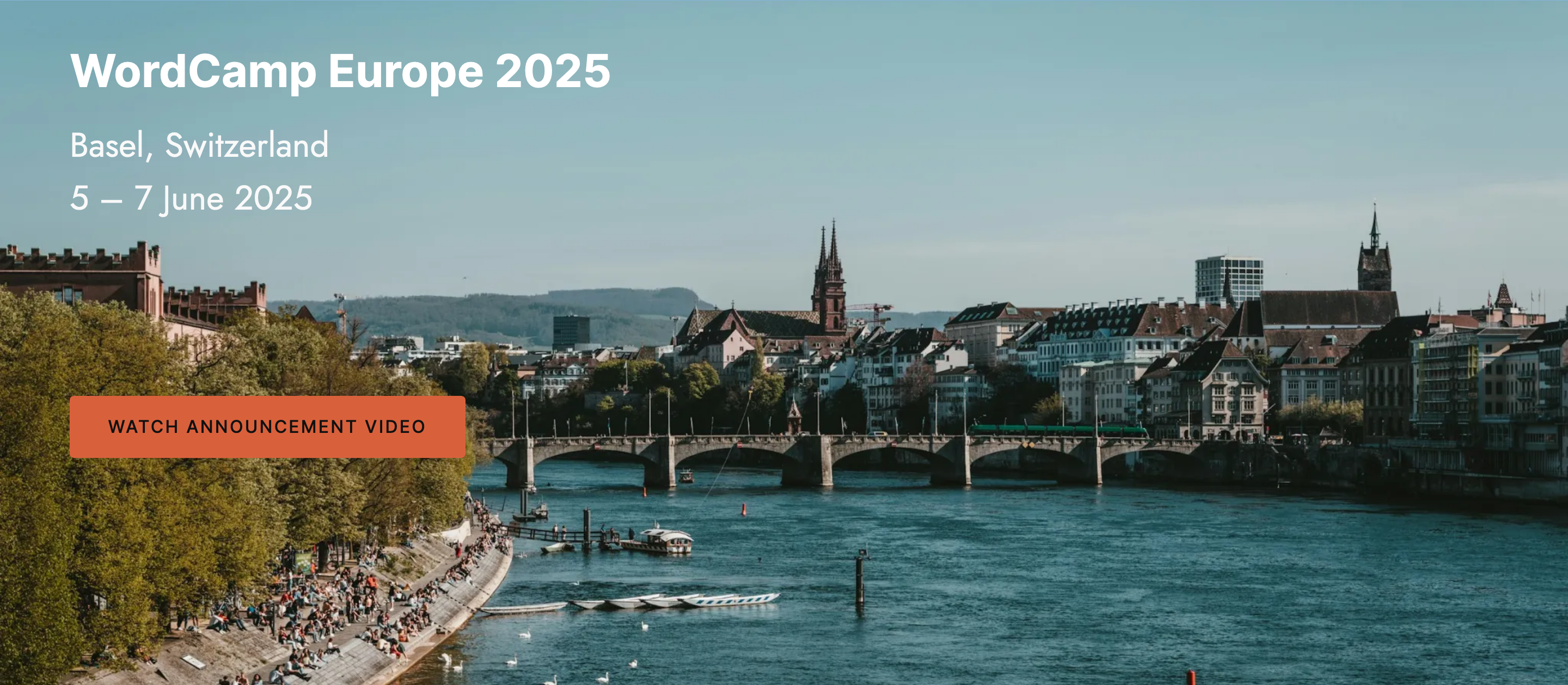
    Basel, Switzerland is gearing up to host what might be the biggest WordCamp Europe yet. After the stellar success of WCEU 2024 in Torino with nearly 3,000 attendees, the 2025 edition is expected to welcome up to 4,500 WordPress enthusiasts from June 5-7.

    Want in on the action? Tickets are now available in two flavors:

    – The General admission ticket at €50 (a steal for what you get!)

    – The Micro-Sponsor ticket at €250 (perfect if you want to give back to the community)

    Both tickets include access to all sessions, Contributor Day, lunch, coffee breaks, and the legendary After Party. Speaking of Contributor Day, while it’s included, you’ll need to register separately – it’s worth marking your calendar for June 5th.

    Pro tip: You’ll need a WordPress.org account to purchase tickets. If you’re planning to bring your team, remember each person needs their own ticket, and you can easily transfer ownership through the confirmation email link.

    A First for Europe: The WCEU Diversity Scholarship

    Here’s something that makes me particularly proud of our community: WCEU 2025 is introducing its first-ever Diversity Scholarship program. Previously successful at WordCamp Asia, this initiative is now crossing continents thanks to the collaborative efforts of WordPress Community Support PBC and Queeromattic.

    The scholarship is a game-changer for active WordPress contributors who:

    – Haven’t experienced a flagship WordCamp before

    – Need financial support to attend

    – Represent underserved groups in open-source

    – Are passionate about growing their local WordPress community

    The package covers travel to Basel, accommodation, and event tickets. Applications are open until January 31st, 2025 – I’d strongly encourage eligible community members to apply.

    T-Shirt Alert: Size Matters!

    For those planning ahead, you’ve got until May 8th, 2025, to choose your t-shirt size. WCEU offers sizes from XS to 4XL in standard fit, with detailed measurements available. Don’t wait until the last minute – picking the right size now means one less thing to worry about later.

    That’s all for this issue of WPMore! Got questions about WordCamp Europe 2025 or planning to attend? Drop me a line – I’d love to hear your thoughts.

    See you in Basel!

    Best,

    WPMore

    P.S. Remember, tickets are refundable until May 19th, 2025, but why would you want to miss this?

    Thanks for reading WPMore!! Subscribe for free to receive new posts and support my work.

  • A New Chapter in WordPress Plugin Distribution: The Not WP Repository

    A New Chapter in WordPress Plugin Distribution: The Not WP Repository

    A WordPress developer worked on creating an open WordPress repository during a marathon coding session.

    Thanks for reading WPMore!! Subscribe for free to receive new posts and support my work.

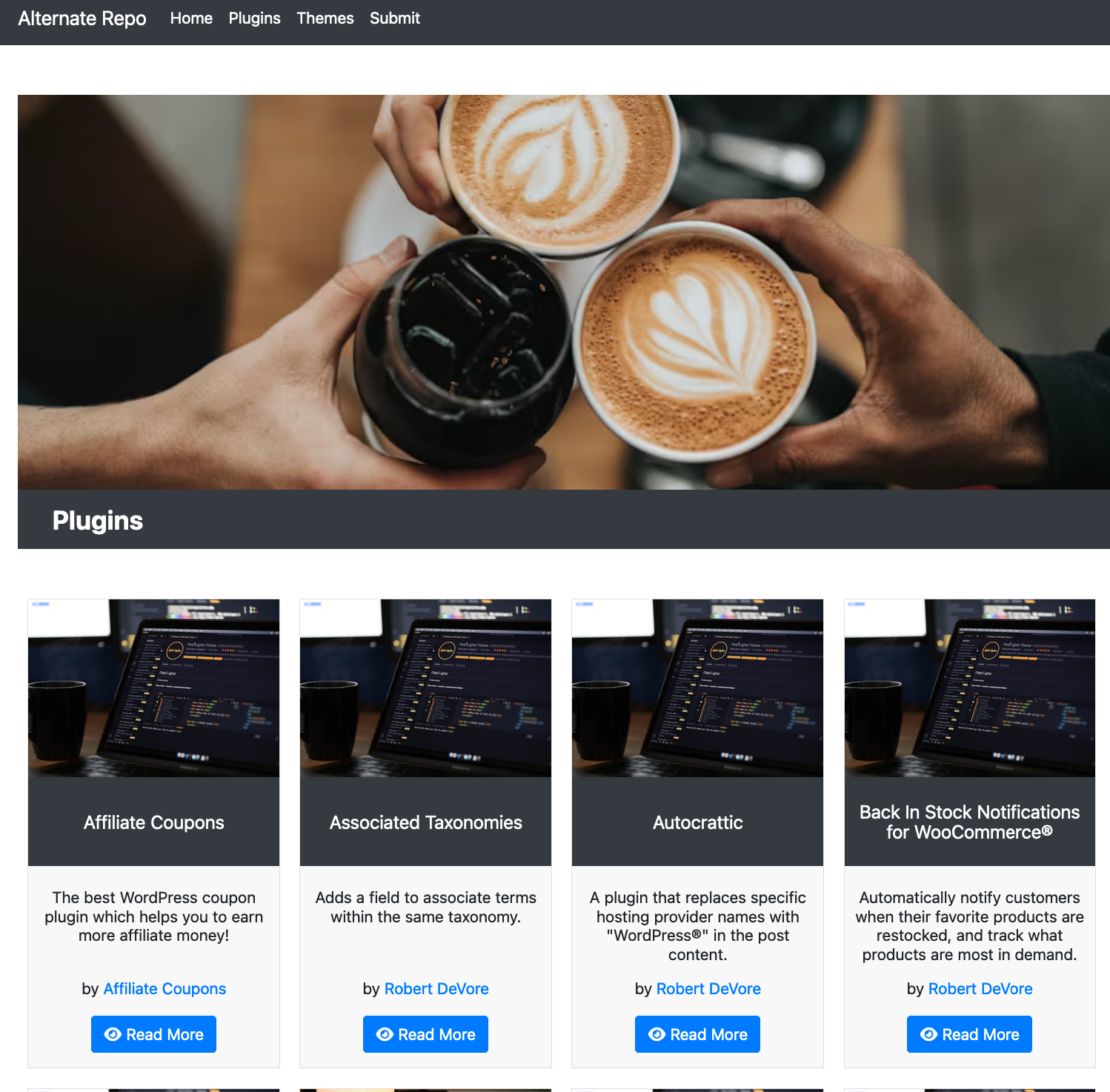
    The WordPress ecosystem is evolving, and this week brings exciting news from Vancouver-based developer Duane Storey. Remember Duane? He’s the mind behind one of WordPress’s #1 plugins (later acquired by a Canadian investment firm) and has now launched an alternative WordPress repository at notwp.org.

    Why This Matters

    The WordPress.org repository has been the de facto standard for plugin distribution for years. But what if developers want options? What if they need more control over their distribution channels? This is where Storey’s new project comes in.

    Inside the Not WP Repository

    The repository consists of three main components:

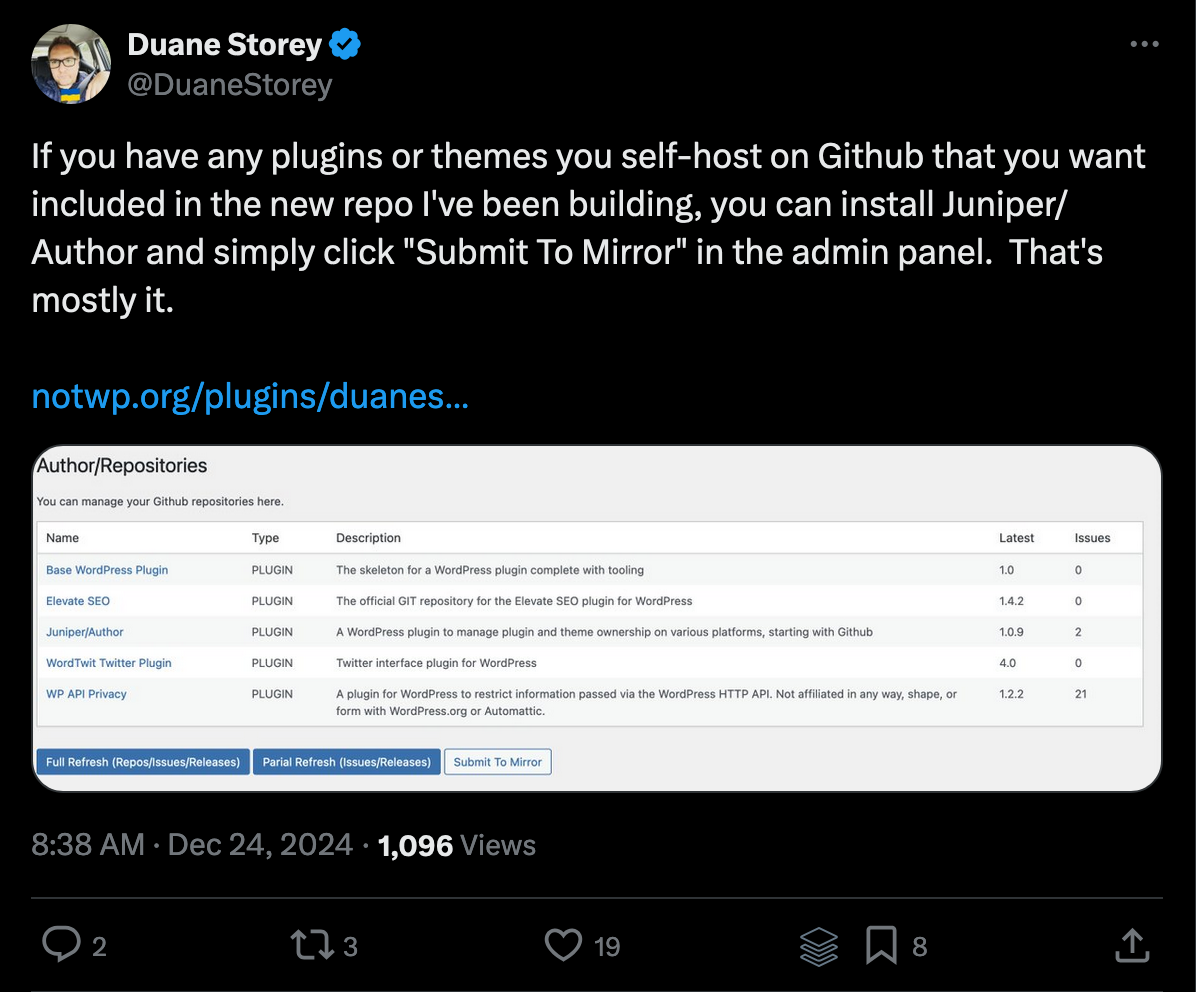
    Juniper/Author: A management plugin that automatically detects and submits Github-hosted plugins to the repository. It’s particularly noteworthy for its security features – including cryptographic signing of releases to prevent supply-chain attacks (something that could have prevented issues like the recent Advanced Custom Fields incident).

    Juniper/Server: The backbone of the repository, generating static HTML files every ten minutes. It includes SHA256 hash verification for plugin downloads – a practical security measure that lets users verify their downloads haven’t been tampered with.

    For more technical details please read the in-detail post Duane Storey wrote in his blog.

    Decentralization by Design

    Perhaps the most intriguing aspect is the built-in mirroring support. Using a simple configuration file, anyone can set up a mirror of the repository. This means hosts like WP Engine could potentially run their own mirrors, and organizations could even set up private internal repositories.

    As Storey puts it: “I’m not trying to consolidate power – I’m trying to distribute it.” If notwp.org were to disappear tomorrow, any mirror could take over with minimal disruption.

    Looking Ahead

    The project’s roadmap includes:

    – Automating Github information updates

    – Completing the code signing implementation

    – Expanding Github data integration

    – Building out author pages

    – Creating a site-wide “Sponsor” page to highlight plugins seeking financial backing

    Supporting Plugin Developers

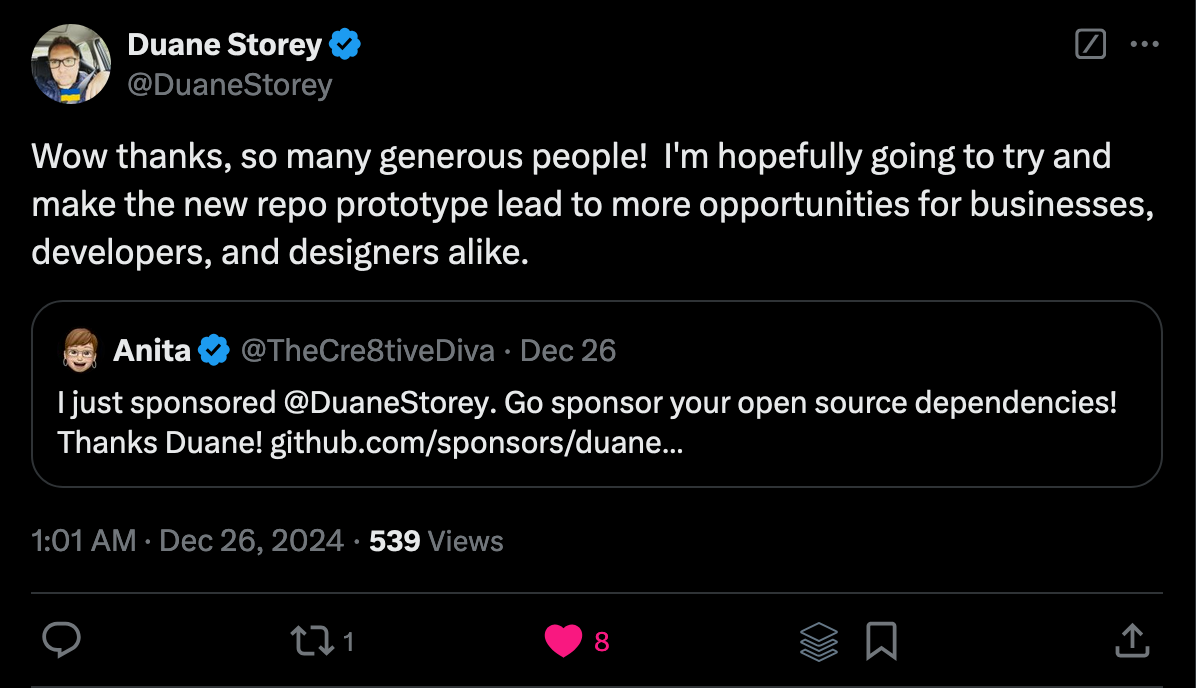
    A key focus of this initiative is creating more funding opportunities for plugin developers. The repository integrates with Github Sponsors, making it easier for users and corporations to support the developers whose work they rely on.

    This aligns well with recent community movements, including the launch of the WP Community Collective, a non-profit focused on transparent budgeting in the WordPress ecosystem.

    Editor’s Note

    This development comes at an interesting time for WordPress. With discussions about future infrastructure planned for early 2025 (potentially hosted by Joost), Storey’s proof-of-concept demonstrates what’s possible when we think beyond traditional boundaries.

    Whether you’re a plugin developer looking for alternative distribution channels or a WordPress enthusiast interested in the ecosystem’s evolution, the Not WP Repository is worth watching. You can explore it at notwp.org, and if you’re interested in supporting its development, look for the sponsor button on the main Juniper/Author page.

    WPMore Team

    WPMore is your weekly dive into the WordPress ecosystem. Have thoughts about the Not WP Repository? Drop us a line – we’d love to hear from you.

    Thanks for reading WPMore!! Subscribe for free to receive new posts and support my work.

  • Matt Mullenweg's Christmas Joke Falls Flat, Community Responds | WPMore Holiday Drama Edition

    Matt Mullenweg's Christmas Joke Falls Flat, Community Responds | WPMore Holiday Drama Edition

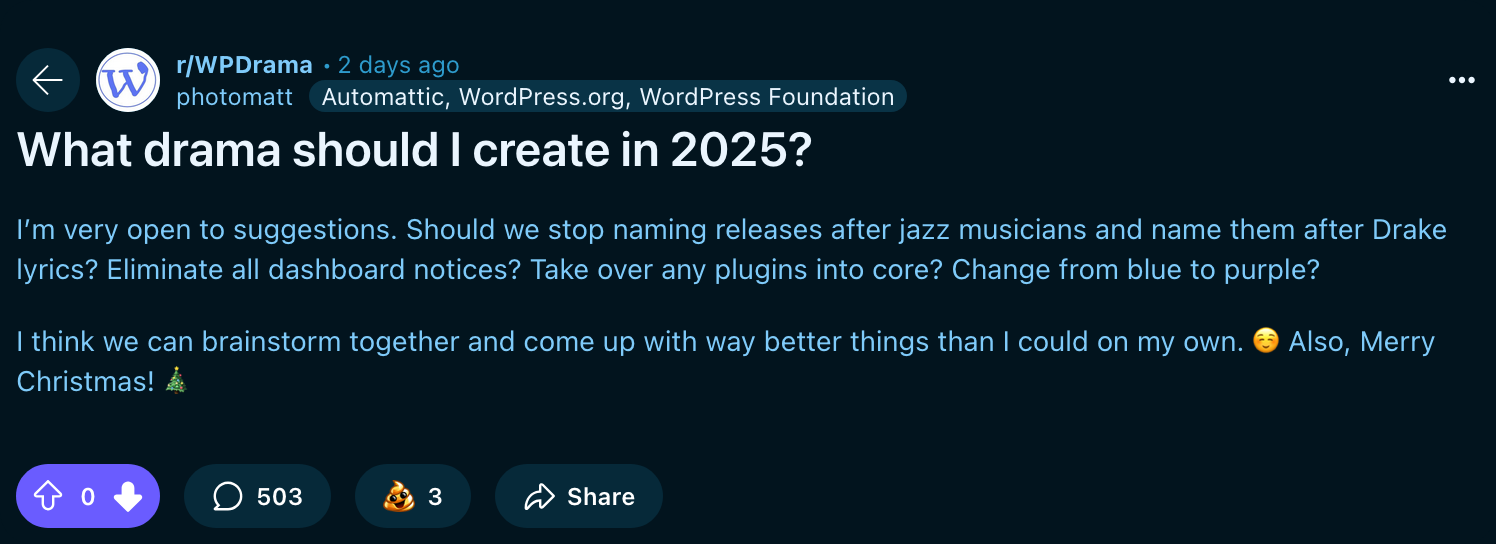
    WordPress co-founder Matt Mullenweg ask on Reddit, What drama he creates in 2025? The WordPress community reacts.

    Thanks for reading WPMore!! Subscribe for free to receive new posts and support my work.

    In what can only be described as an ill-timed attempt at humor, WordPress co-founder Matt Mullenweg took to Reddit on Christmas Day to seemingly make light of recent controversies. His post asking “What drama should I create in 2025?” and suggesting changes like “naming releases after Drake lyrics” instead of jazz musicians drew swift criticism from the WordPress community.

    The response was particularly pointed given the ongoing tension surrounding Automattic’s recent actions against WP Engine. One Redditor, WillmanRacing, delivered a scathing response highlighting potential legal implications of recent events, specifically mentioning Sherman Act violations and the possibility of class-action lawsuits.

    The community’s frustration was perhaps best captured by zirconst, an enterprise WooCommerce user processing over $1M in annual transactions: “Your recent actions have made me seriously consider whether another platform would be better, despite our heavy investment in your ecosystem,” they wrote. “If you can simply shut down a company’s access to wordpress.org at will, or demand a % of revenue, or take over a plugin repository – a plugin that we use – that introduces a lot of risk and uncertainty.”

    Several community members expressed concern about Mullenweg’s approach to the situation. “My concern here is that you imply our ongoing concerns are a joke. Matt, this is actually really serious and this isn’t either funny or appropriate,” wrote brianozm.

    The discussion spilled over onto X (formerly Twitter), where industry figures weighed in. Kellie, a prominent voice in the WordPress community, pointed out the inconsistency in trademark enforcement: “You either enforce trademark or you don’t. It’s not a matter of how big, little, PE backed, or insignificant you believe the company you allege is infringing. You have to defend equally.”

    Takis Bouyouris offered a more philosophical take, comparing the situation to Gabriel García Márquez’s “The Autumn of the Patriarch” and suggesting this might be indicative of a leader becoming increasingly detached from their community.

    As we head into 2025, this holiday drama underscores the growing tensions within the WordPress ecosystem, particularly regarding governance, trademark enforcement, and the relationship between Automattic, the WordPress Foundation, and the broader WordPress community.

    Your trusted source for WordPress news and insights. Subscribe to WPMore for weekly updates on the WordPress ecosystem.

    Thanks for reading WPMore!! Subscribe for free to receive new posts and support my work.

    WPMore

    [Author’s Note: I tried to maintain a professional tone while reporting on these events objectively, keeping the original quotes intact to preserve authenticity while providing necessary context for readers who might be new to the situation.]

  • Matt Mullenweg vs Inc. Magazine

    Matt Mullenweg vs Inc. Magazine

    Inc. magazine published a story on Matt Mullenweg VS WP Engine, Matt fight back calling it a hit piece

    The WordPress community finds itself at a crossroads as a bitter dispute between Matt Mullenweg and WP Engine unfolds. What began as tensions over trademark rights and open-source contributions has escalated into legal battles and public accusations, leaving many wondering about the future of the platform that powers 43% of the web.

    Thanks for reading WPMore!! Subscribe for free to receive new posts and support my work.

    The Inc Magazine Story

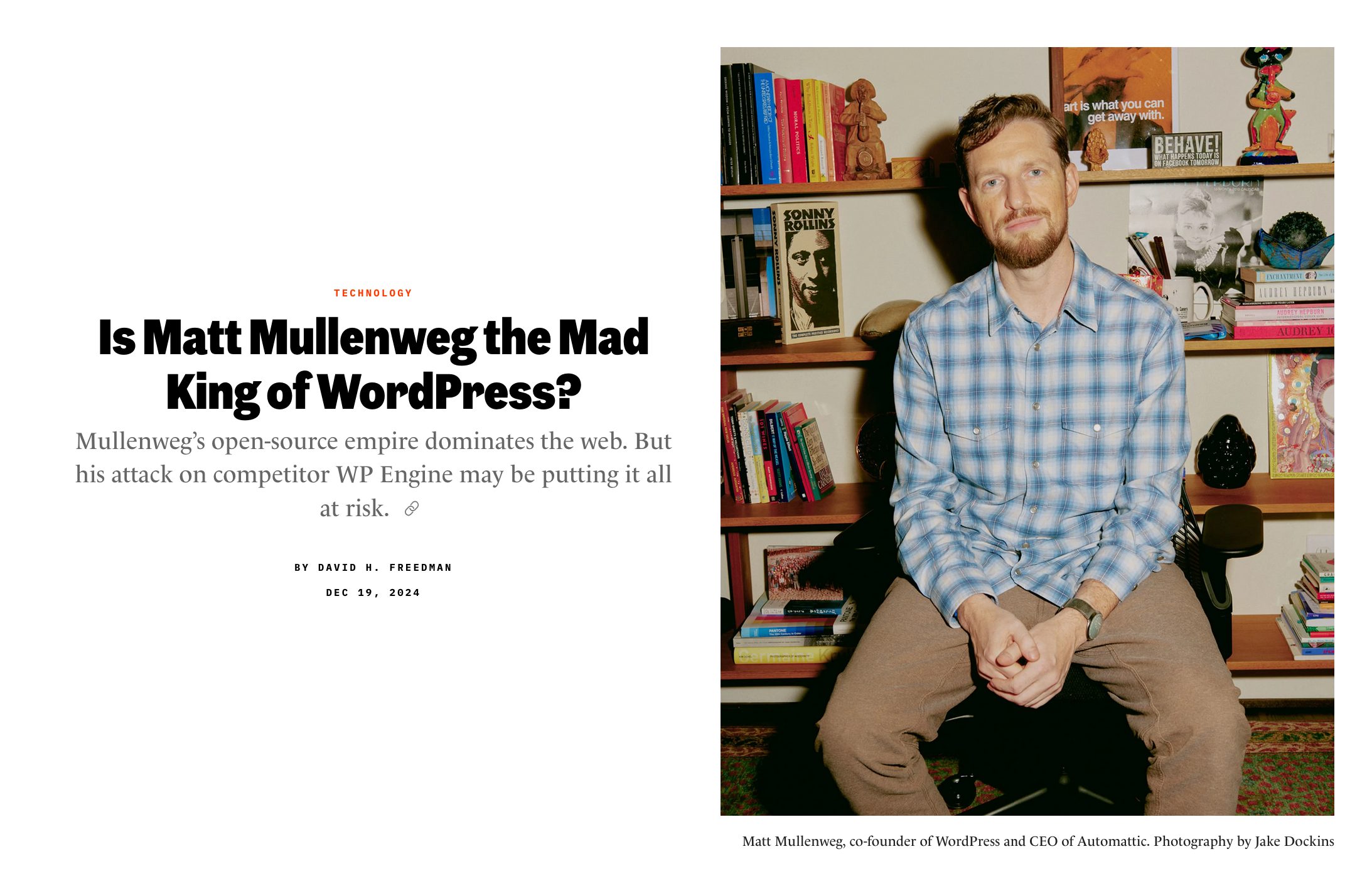
    Last week, Inc Magazine published an extensive profile of Matt Mullenweg, painting a picture of a leader whose control over WordPress has become increasingly controversial. The piece, written by David H. Freedman, details how in September, Mullenweg temporarily blocked WP Engine’s access to WordPress.org resources, affecting their customers’ ability to perform automatic updates.

    The article portrays Mullenweg as someone whose leadership style has shifted from “benevolent dictator” to what some now view as more authoritarian control. It highlights his ownership of WordPress.org and his role in the WordPress Foundation, suggesting these give him outsized influence over the ecosystem.

    Read the Inc. profile here.

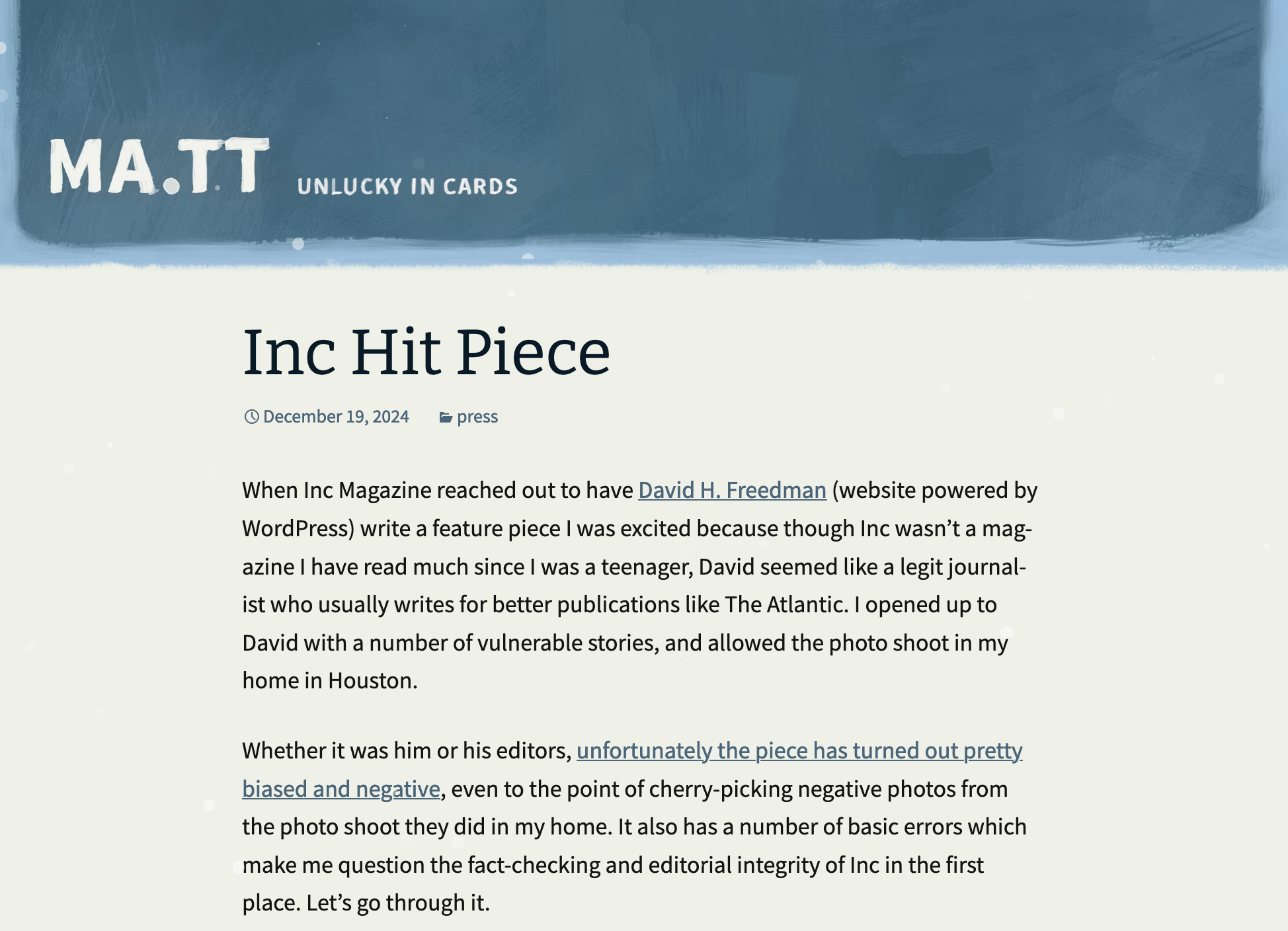
    Mullenweg Responds

    However, there’s another side to this story. In a detailed blog post responding to the Inc piece, Mullenweg challenges numerous aspects of the reporting, pointing out what he claims are factual errors and mischaracterizations. He disputes Inc’s valuation figures, clarifies the WordPress Foundation’s structure, and provides context for decisions that the magazine portrayed as arbitrary or vindictive.

    Key points of contention include:

    – The true nature of the trademark dispute with WP Engine

    – The actual number of affected websites (roughly 745,000 rather than 1.5 million)

    – The WordPress Foundation’s governance structure

    – The historical context of previous WordPress controversies

    What This Means for the Community

    This situation raises important questions about power dynamics in open-source software. While WordPress’s success has been built on community contribution and open collaboration, the current dispute highlights the complex relationship between commercial interests and open-source principles.

    For WordPress users and developers, several practical considerations emerge:

    – The stability of the WordPress ecosystem

    – The relationship between commercial hosting providers and core WordPress resources

    – The future of trademark enforcement in the WordPress space

    – The balance between centralized leadership and community governance

    Looking Forward

    Despite the controversy, WordPress continues to grow its market share. The platform’s fundamentals remain strong, though this situation may lead to meaningful discussions about governance and the relationship between commercial entities and open-source projects.

    The outcome of WP Engine’s lawsuit and any resulting changes to WordPress’s governance structure could reshape how open-source projects handle similar situations in the future. As this story develops, we’ll continue to monitor its implications for the broader WordPress community.

    WPMore team.

    Your thoughts? Share them with us in the comments below.

    Thanks for reading WPMore!! Subscribe for free to receive new posts and support my work.

  • Leadership Crisis Rocks WordPress Community | WPMore Monday Issue

    Leadership Crisis Rocks WordPress Community | WPMore Monday Issue

    Breaking developments reshape WordPress’s future, Is it the end of Matt Maullenweg’s control or it’s just a smoke?

    Thanks for reading WPMore!! Subscribe for free to receive new posts and support my work.

    The WordPress ecosystem finds itself at a pivotal moment as prominent community figures call for fundamental changes in the project’s governance structure.

    a laptop computer sitting on top of a table

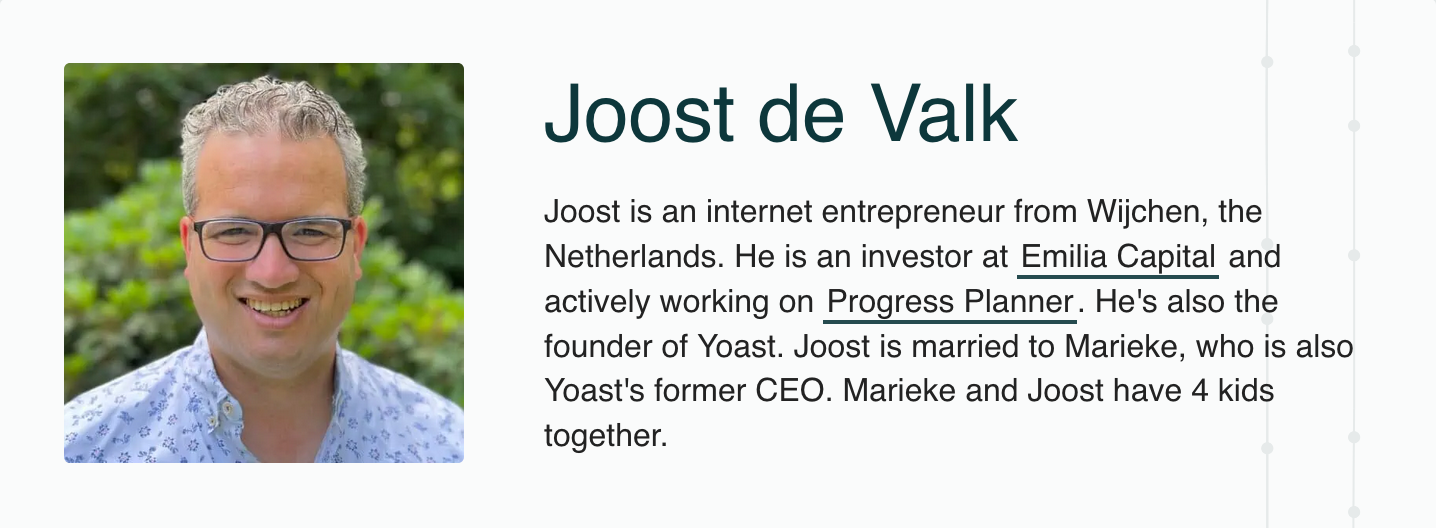
    This week brought significant developments that could reshape WordPress’s future, starting with Joost de Valk’s public statement challenging the current leadership model.

    De Valk, co-founder of Yoast SEO, published “Breaking the Status Quo,” arguing that WordPress needs to move beyond its current single-leader structure. His critique comes amid rising tensions following Matt Mullenweg’s temporary closure of WordPress.org registrations and the ongoing Automattic-WP Engine legal dispute.

    “We, the WordPress community, need to decide if we’re ok being led by a single person who controls everything,” de Valk wrote, proposing a five-point plan for reform:

    1. Establish a foundation-led board with diverse industry representation

    2. Transfer WordPress.org and community assets to this foundation

    3. Reform trademark handling to allow freer usage

    4. Create transparent sponsorship programs

    5. Form specialized teams with clear governance structures

    Community Leaders Rally for Change

    Karim Marucchi, CEO of Crowd Favorite, quickly backed de Valk’s proposal, emphasizing the need to protect WordPress’s ecosystem. Marucchi outlined five critical priorities:

    – Securing the supply chain and modernization efforts

    – Defining and creating shared community resources

    – Developing WordPress as an “Open-Web Operating System”

    – Fostering innovation through open source

    – Leading in data privacy and accessibility

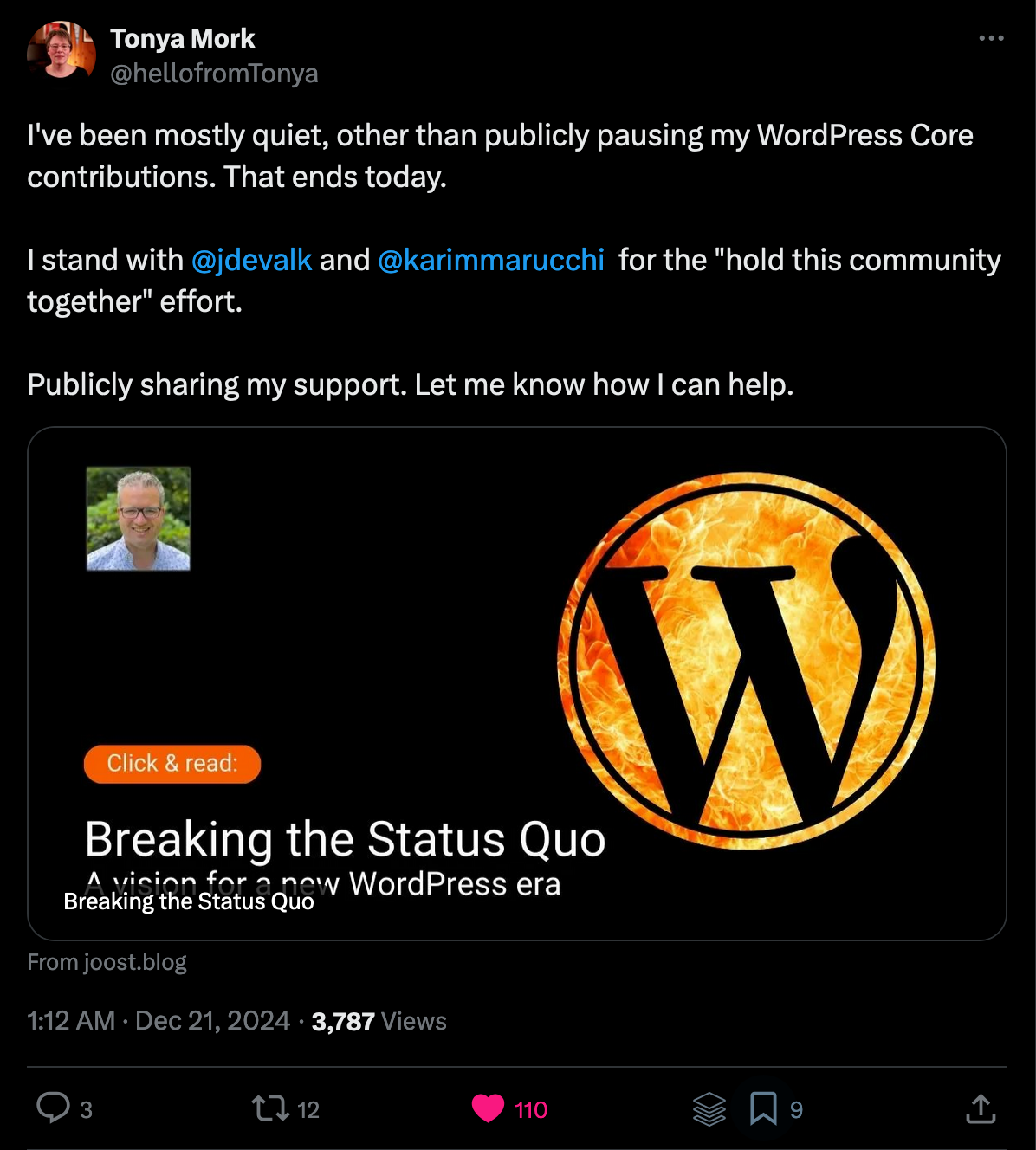
    The proposal has gained support from notable figures including Brian Gardner, Tonya Mork, and Katie Keith.

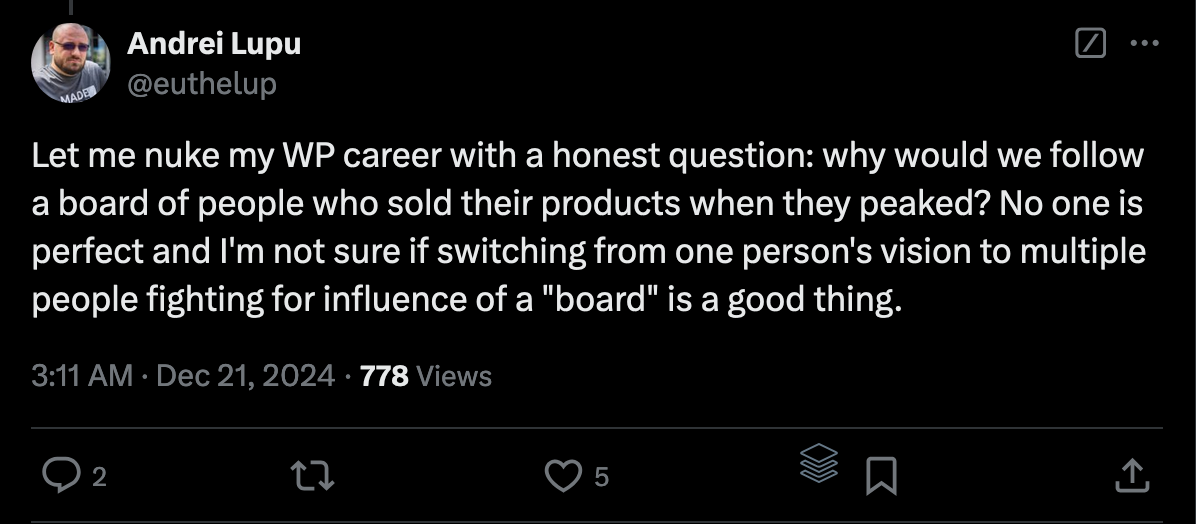
    However, some community members expressed skepticism, with Andrei Lupu questioning whether “switching from one person’s vision to multiple people fighting for influence” would benefit the project.

    Mullenweg’s Response

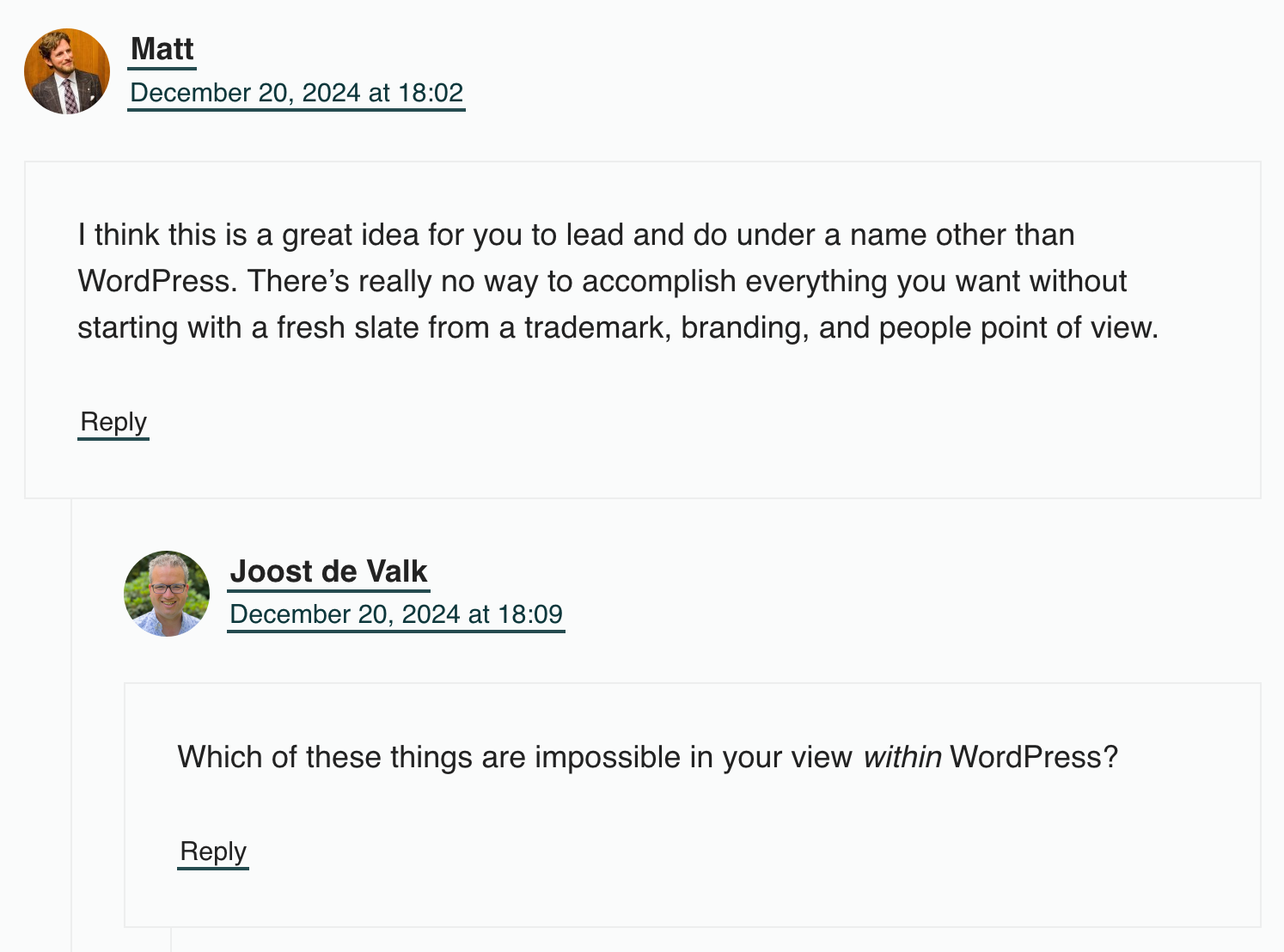
    Matt Mullenweg’s response was brief but clear. Commenting on de Valk’s post, he suggested implementing these ideas “under a name other than WordPress,” noting the impossibility of achieving the proposed changes within the current WordPress framework.

    A Fork in the Road

    Morten Rand-Hendriksen’s “After WordPress” presents two potential paths forward:

    1. A reformed WordPress with distributed governance and Mullenweg in a visionary rather than managerial role

    2. A community-led effort to build something new, learning from WordPress’s 20-year journey

    What’s Next?

    De Valk and Marucchi plan to convene with community leaders in January 2025 to chart a path forward. The immediate focus will be on establishing federated repositories to prevent single-point control over WordPress’s plugin ecosystem.

    Personal Take

    As someone who’s in WordPress for years, I feel like a watershed moment. The community faces crucial decisions about governance, innovation, and sustainability. While change often brings uncertainty, it also creates opportunities for growth and improvement.

    WPMore Team

    Did you find this newsletter valuable? Forward it to a friend who might enjoy it too.

    Thanks for reading WPMore!! Subscribe for free to receive new posts and support my work.

  • Matt Mullenweg Declares Holiday Break, WP Scholarship Winner & What's New GutenBerg | WordPress Weekly Digest

    Matt Mullenweg Declares Holiday Break, WP Scholarship Winner & What's New GutenBerg | WordPress Weekly Digest

    Late December 2024 Edition – Holiday Drama & Community Updates

    Thanks for reading WPMore!! Subscribe for free to receive new posts and support my work.

    🎄 WordPress.org Takes an Unprecedented Holiday Break

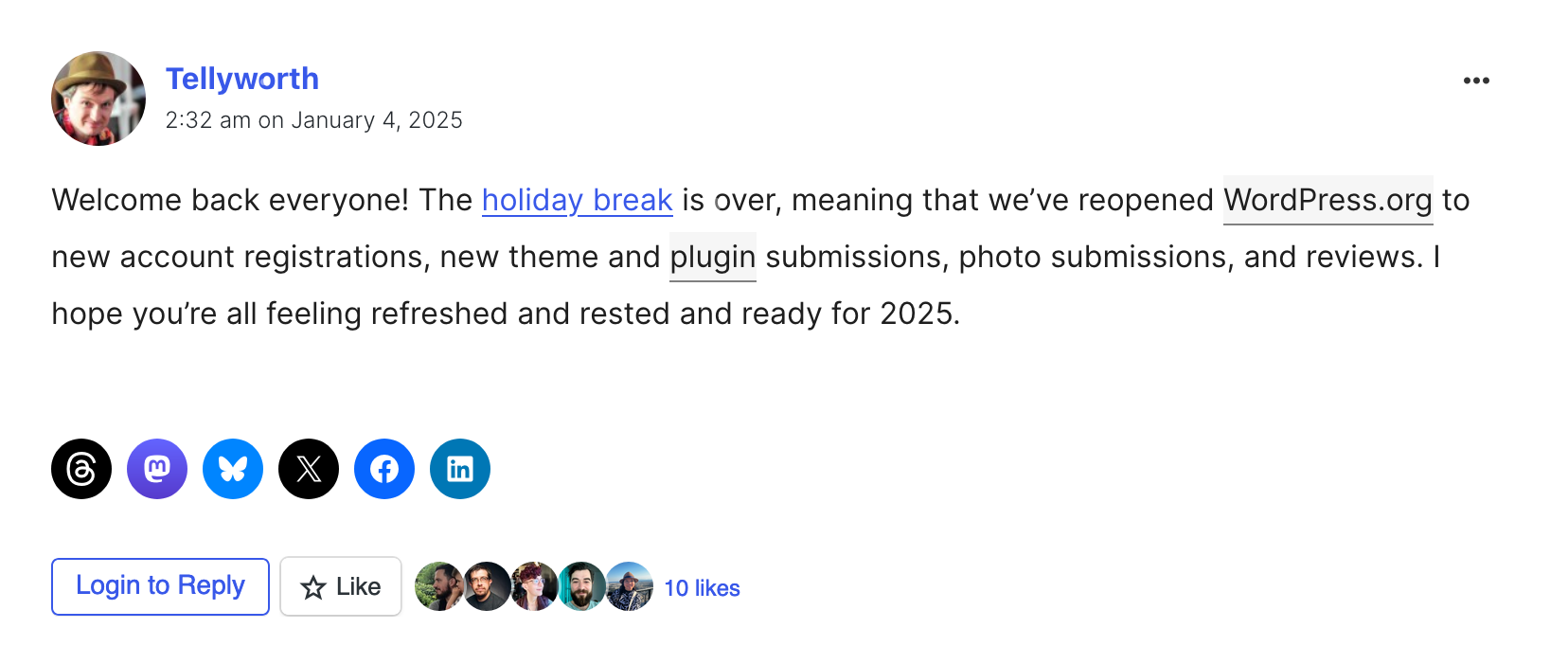
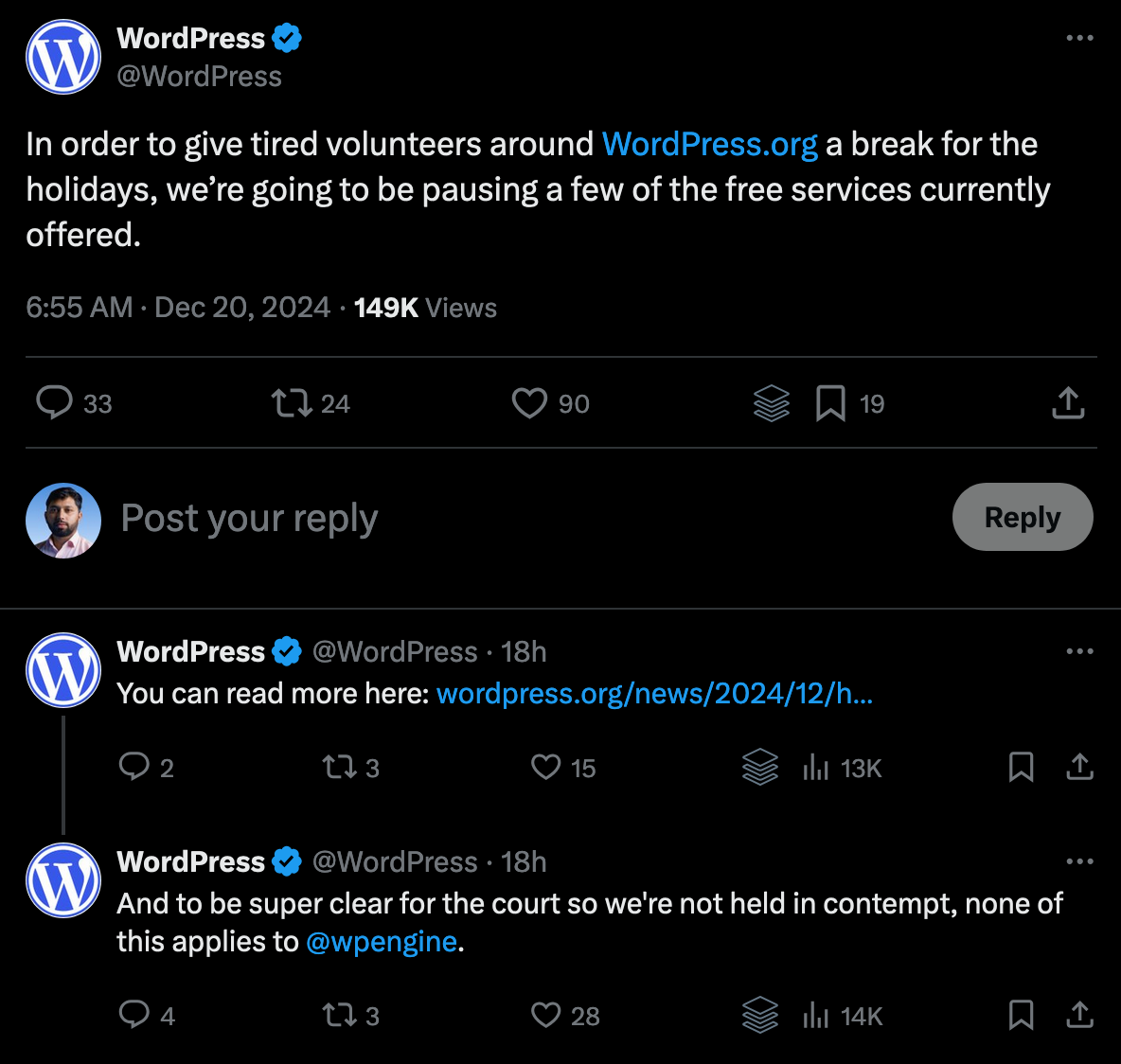
    Matt Mullenweg just announced something we’ve never seen before: WordPress.org is hitting the pause button on several free services for the holidays. Think of it as WordPress’s version of hanging up the “Gone Fishing” sign.

    What’s paused:

    – New account registrations

    – Plugin reviews

    – New submissions to plugin, theme, and photo directories

    Don’t worry—WordCamp ticket buyers can still create accounts thanks to a quick fix by Dion Hulse. And yes, WP Engine keeps full access (more drama on that front in Matt’s spicy blog post).

    🎯 Numbers That’ll Make Your Head Spin

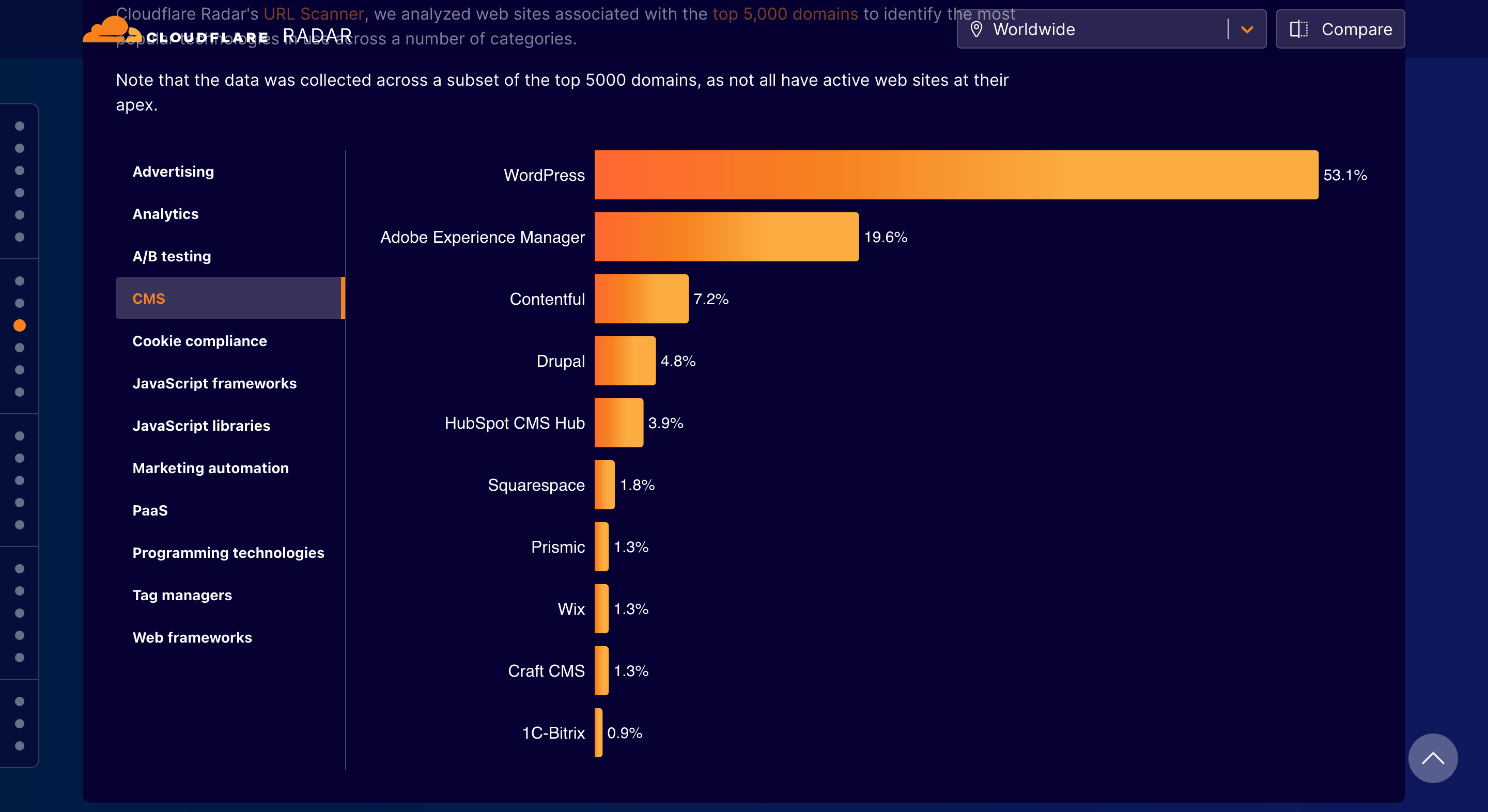
    Cloudflare dropped their yearly radar report, and guess what? WordPress now powers 53% of top websites. Let that sink in.

    Meanwhile, internet traffic jumped 17.2% this year. Not too shabby!

    🏆 Community Spotlight: Meet WordPress Scholarship Winner

    Big congratulations to Lena (Eleni) Stergatou, who just won the first-ever WordCamp Europe Kim Parsell Memorial Scholarship! Coming from Greece, Lena’s been wrangling code and spreading WordPress love since 2008. She’ll be joining us at WCEU 2025 in Basel, Switzerland.

    Know about Kim Parsell

    🛠 Gutenberg 19.9: The Last Update of 2024

    The final Gutenberg release of the year is here with some neat tricks up its sleeve:

    – Style Book now works with classic themes

    – New Query Total block for better user experience

    – phpMyAdmin in wp-env (developers, rejoice!)

    – Fresh features for featured images in Cover blocks

    – Easier homepage settings right in the Site Editor

    Read the full changelog here.

    Looking Ahead

    While WordPress.org takes a breather, the community keeps moving forward. Matt hopes to restore services “sometime in the new year,” but the timing remains as mysterious as PHP’s type system.

    Keep building great things,

    The WPMore Team

    Got a WordPress story to share? Drop us a line!

    Want weekly updates? Hit that subscribe button ⚡

    Thanks for reading WPMore!! Subscribe for free to receive new posts and support my work.

  • What's Cooking in WordPress? 20 December 2024 Edition

    What's Cooking in WordPress? 20 December 2024 Edition

    Pinapple gate, WP support fund, and WP Community Collective Gets Official

    Thanks for reading WPMore!! Subscribe for free to receive new posts and support my work.

    🍍 Pineapple Gate: The Checkbox Saga Concludes

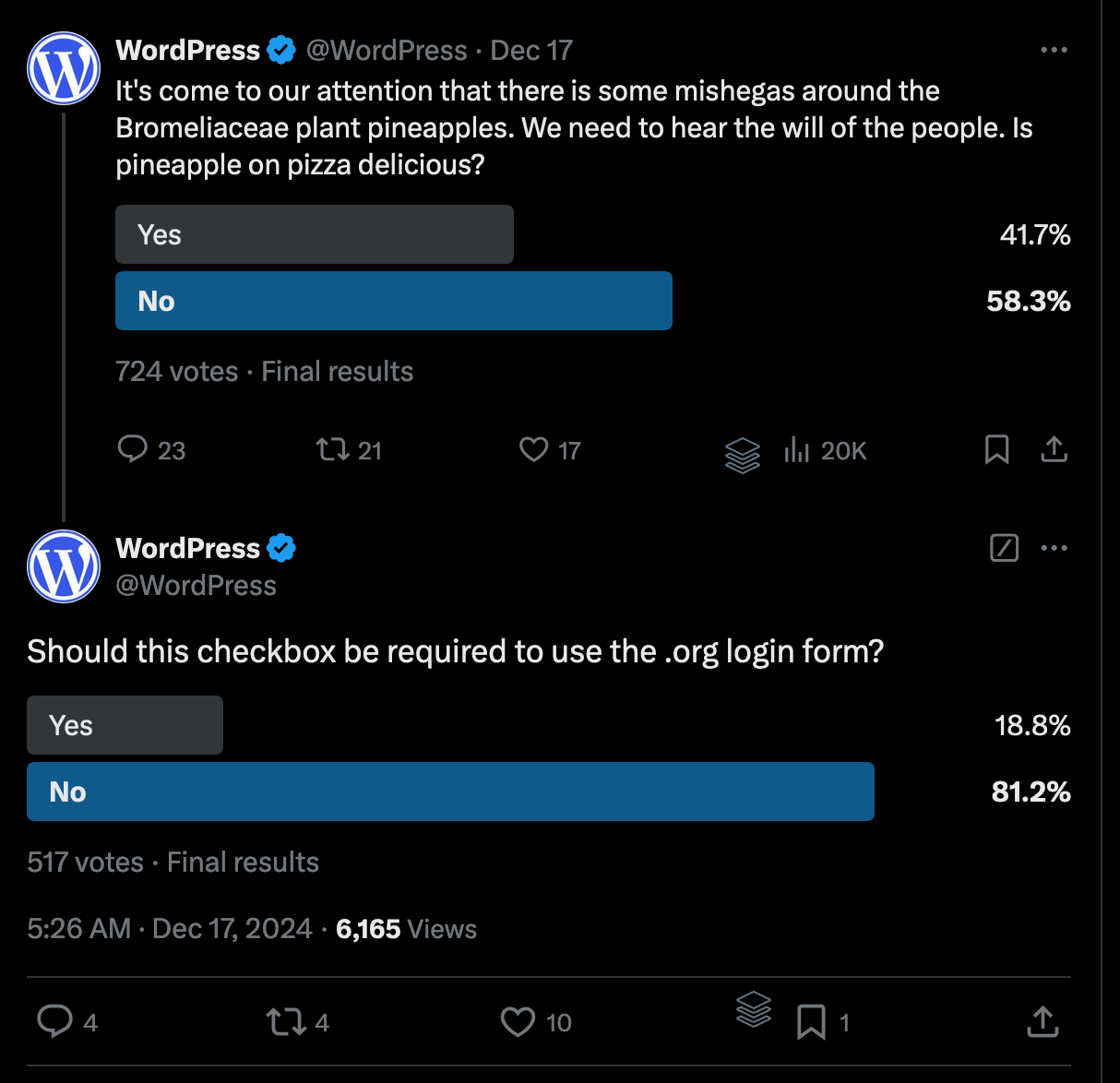
    Remember that quirky pineapple pizza checkbox on WordPress.org? Well, the people have spoken. After 81.2% of users voted against making it mandatory (and 58.3% boldly declared pineapple doesn’t belong on pizza), it’s now optional.

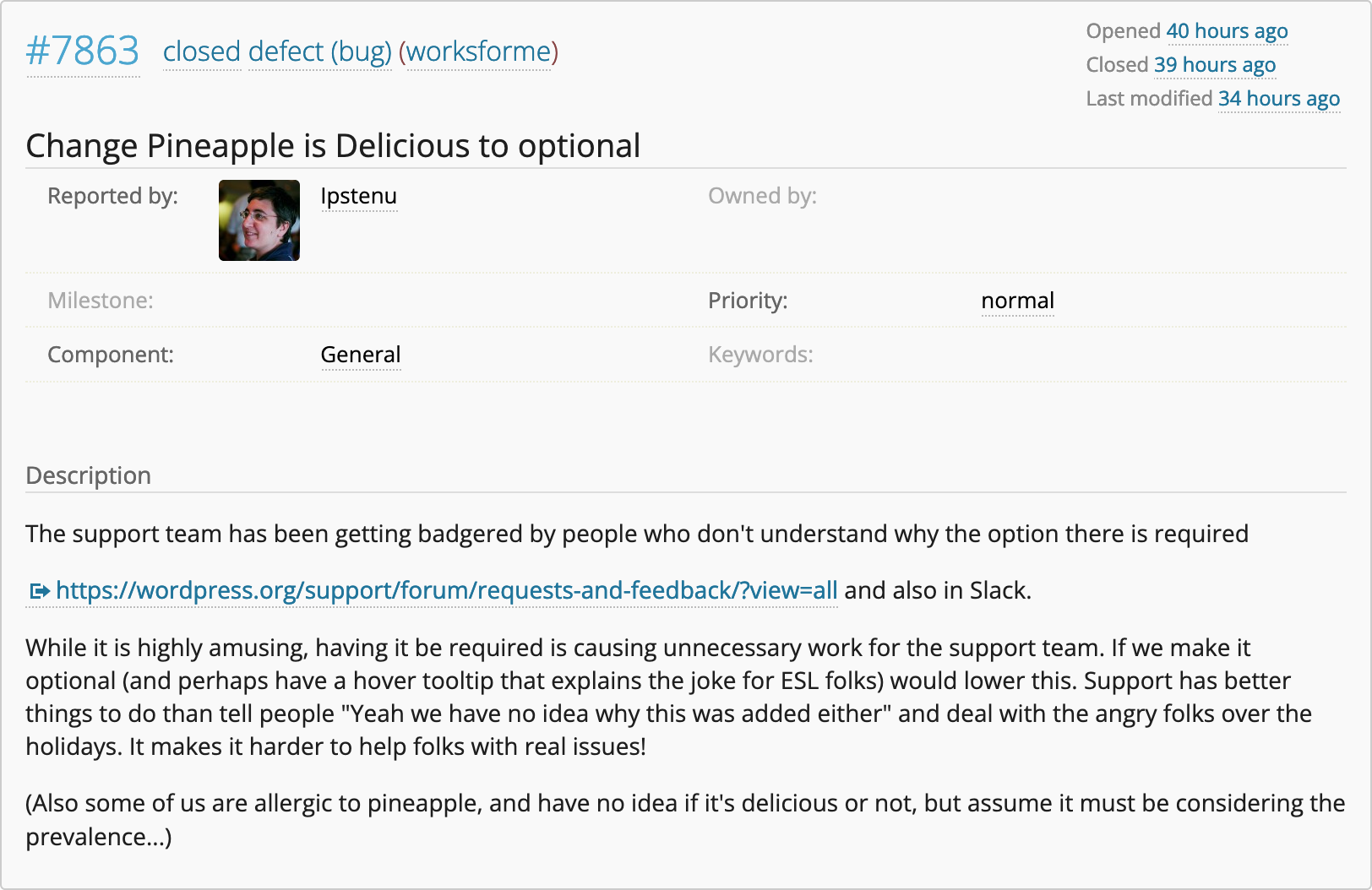
    The change came after Mika Epstein filed a Trac ticket, and Matt Mullenweg quickly backed the move. Some community members, like Patricia BT, suggested replacing it with something more professional – perhaps a Code of Conduct acknowledgment.

    One Reddit user gave

    the checkbox a proper sendoff:

    “The Pineapple is dead! Long live the Pineapple!”


    🌎 Breaking Barriers: Support Inclusion in Tech Goes Continental

    Good news for WordPress enthusiasts in the Americas! Support Inclusion in Tech (SiNC) is expanding its reach. Founded by Winstina Hughes, the program now offers $240 grants to help underrepresented groups participate in WordPress events across Europe, Asia, Africa, and now North and South America.

    Mark your calendars:

    – January 2025: Public directory opens

    – March 2025: Grant selections begin

    – Four grants available per region


    🏢 The People’s Voice: WP Community Collective Gets Official

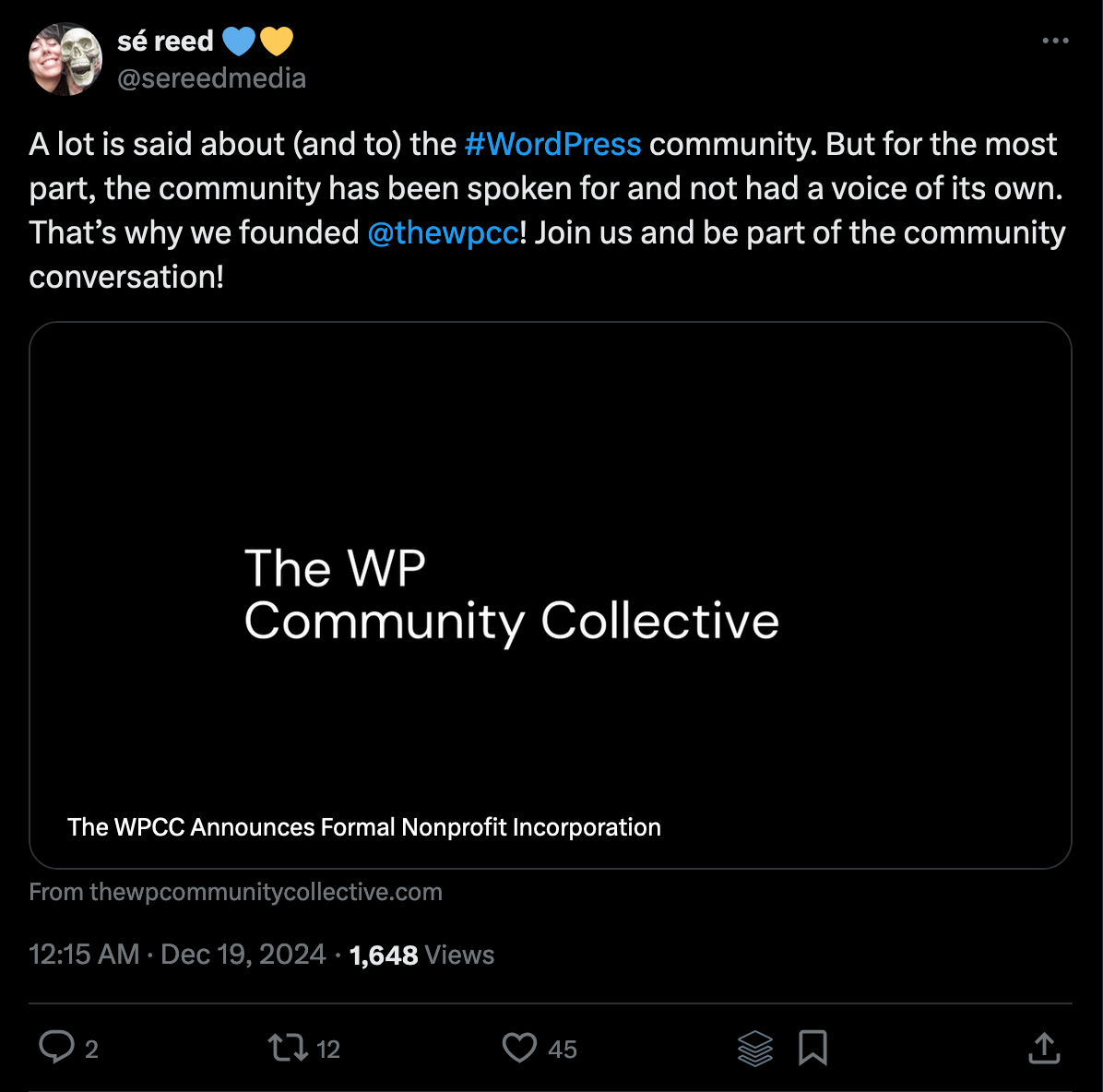
    Big moves from the WP Community Collective! They’ve officially incorporated as a California nonprofit, with Sé Reed at the helm as President & CEO. Their mission? Give the WordPress community a proper seat at the table.

    Source: @sereedmedia

    What’s cooking:

    – 501(c)(6) status pending

    – $5 minimum membership

    – New Slack workspace for members

    – Business tiers coming in 2025

    – Charitable subsidiary in the works

    Despite a hiccup with their fiscal host earlier this year, WPCC is pushing forward with plans for accessibility and DEIB initiatives.


    What’s Next?

    The WordPress community keeps evolving. From silly checkboxes to serious inclusion efforts, it’s clear that change comes in all shapes and sizes. Stay tuned as these stories develop.

    Keep building,

    The WPMore Team

    Love what you’re reading? Share it with a friend!

    Thanks for reading WPMore!! Subscribe for free to receive new posts and support my work.

  • When Pizza Meets Tech Drama #WPDrama

    When Pizza Meets Tech Drama #WPDrama

    The Checkbox That Broke the Internet (And Divided Pizza Lovers)

    Thanks for reading WPMore!! Subscribe for free to receive new posts and support my work.

    Some days, the tech world serves up something so bizarre that you have to laugh. This month, WordPress.org turned heads with a checkbox that had everyone talking—and it wasn’t about code.

    The Great Pineapple Predicament

    Picture this: You’re trying to log into WordPress.org, and suddenly you’re confronted with an existential question that has divided dinner tables for years: “Is pineapple delicious on pizza?”

    What started as a seemingly lighthearted jab quickly became a full-blown community drama. Before the pineapple checkbox, there was a previous mandatory confirmation about WP Engine affiliations—a remnant of the recent plugin controversy that’s been brewing like a strong espresso.

    Community Reactions: Spicy as a Jalapeño Pizza

    The WordPress community didn’t hold back:

    🍍 Nick Weisser quipped about “breaking Italian law

    🤨 Maarten Belmans worried about enterprise trust

    😤 Bozz Media called it “unprofessional

    🤔 Gergely Orosz saw it as a symptom of billion-dollar tech feuds

    Francesca Marano of Patchstack summed it up perfectly: “The immaturity is… something else.

    The Deeper Slice

    This isn’t just about pizza. It’s a reflection of the ongoing tensions in the WordPress ecosystem. The recent WP Engine and Automattic dispute has left many wondering about the platform’s professionalism.

    Brett Atkin captured the sentiment: “Sad, embarrassing, and unprofessional.

    Poll Position

    Gergely Orosz’s X poll drew over 1,500 votes—proving that nothing unites (or divides) people quite like pizza and tech drama.

    The Takeaway

    Sometimes, tech is serious. Sometimes, it’s absurd. And sometimes, it’s a mandatory checkbox about pineapple on pizza.

    Staying Saucy,

    The WPMore Team

    Want more tech drama served hot?

    Thanks for reading WPMore!! Subscribe for free to receive new posts and support my work.

  • WPMore Special Edition: State of the Word 2024 from Tokyo

    WordPress Goes Global: Matt Mullenweg’s Vision Unfolds in Japan

    Imagine WordPress as more than just a platform—it’s a global community. This year’s State of the Word wasn’t just another tech conference; it was a cultural celebration in the heart of Tokyo that revealed just how far we’ve come.

    Thanks for reading WPMore!! Subscribe for free to receive new posts and support my work.

    By the Numbers: WordPress is Everywhere

    Hold onto your keyboards, because these stats are mind-blowing:

    – 43.6% of the internet runs on WordPress

    – 62.3% market share in content management systems

    – Over 500 million core downloads

    – Projected 2.35 billion plugin downloads this year 🚀

    Japan: The Unexpected WordPress Powerhouse

    WordPress isn’t just global—it’s deeply rooted in Japanese tech culture. Did you know?

    – 58.5% of Japanese websites use WordPress

    – Japanese is now the 4th most used WordPress language

    – The first Japanese WordPress site launched just six months after the platform’s debut in 2003

    Gutenberg’s Next Frontier: Collaboration

    The Gutenberg editor is evolving, and it’s getting seriously smart. Imagine Google Docs-like collaboration, built right into WordPress. Matias Ventura, Gutenberg’s lead architect, shared the vision: making WordPress the ultimate writing, design, and development tool.

    WordPress Playground: No Installation Required

    Tech magic alert! WordPress Playground lets you spin up a fully functional WordPress site instantly, on any device. No hosting, no hassle—just pure WordPress exploration.

    Community Spotlight: Voices That Matter

    Mary Hubbard, WordPress Executive Director, dropped some truth bombs about open-source integrity:

    “WordPress belongs to all of us. We’re taking care of it for the next generation.”

    The Human Behind the Code

    Matt Mullenweg made a powerful commitment: he’ll work on WordPress for the rest of his life. Not just as a job, but as a mission to democratize publishing, commerce, and messaging.

    What’s Next?

    Keep an eye on:

    – Block themes (over 1,000 new this year!)

    – Collaborative editing features

    – Continued global expansion

    Stay curious, stay connected

    *Want the inside scoop before everyone else?*

    Thanks for reading WPMore!! Subscribe for free to receive new posts and support my work.

  • The Latest Twist in WordPress: WP Engine Clears the Air with ACF Plugin Restoration

    The Latest Twist in WordPress: WP Engine Clears the Air with ACF Plugin Restoration

    Remember that messy situation in October when WordPress co-founder Matt Mullenweg forked the ACF plugin into “Secure Custom Fields”? Well, it’s taken an unexpected turn.

    Sometimes, tech drama unfolds in unexpected ways. WP Engine returned to the WordPress.org saddle this month after a legal showdown that caught the entire developer community’s attention.

    Thanks for reading WPMore!! Subscribe for free to receive new posts and support my work.

    Key Developments

    Court Steps In

    – Automattic was ordered to restore WP Engine’s repository access

    – The mandatory WordPress.org login checkbox disappeared

    – WP Engine’s full repository access returned

    ACF Plugin Update

    Image

    – WP Engine is now officially listed as the plugin’s author

    – ACF team confirmed they’re back in control

    – Current ACF users: No action is needed on your part

    Community Chatter: Not Everyone’s Singing the Same Tune

    The WordPress ecosystem is buzzing, and opinions are as mixed as a developer’s coffee order:

    Supportive Voices

    – Brian Gardner (WP Engine) kept it simple: “Welcome home, ACF.”

    – Many developers breathed a sigh of relief

    The Skeptics

    – Duane Storey raised eyebrows about repository trustworthiness

    – Suggested developers might want a backup plan

    Matt Mullenweg Speaks Out

    In true Mullenweg fashion, he didn’t hold back: “I’m disgusted and sickened by being legally forced to provide free labor and services to @wpengine, a dangerous precedent that should chill every open source maintainer.”

    What This Means for You, Developer

    Beyond the drama, there are real takeaways:

    – Open-source governance is more complex than it looks

    – Legal mechanisms can quickly reshape community dynamics

    – Always have a Plan B for your critical tools

    The Road Ahead

    One thing’s clear: the WordPress plugin ecosystem just got a lot more interesting.

    **Keep Coding, Keep Creating**

    *Want the inside scoop before everyone else? Subscribe to our newsletter.*

    Thanks for reading WPMore!! Subscribe for free to receive new posts and support my work.