From calls for more regional representation at WordCamp Asia to WooCommerce’s bold AI initiatives. Matt Mullenweg reflects on a turbulent year while WordPress creator shape the platform’s future.
Hello My WordPress Friends!
Welcome to this week’s WP More newsletter issue 29, many new events, and issues are arrived after I last wrote the previous issue.
Let’s dive in —
Thanks for reading WPMore!! Subscribe for free to receive new posts and support my work.
In this Issue:
WordCamp Asia Needs More Local Voices
WooCommerce Embraces the AI Shopping Revolution
Matt Mullenweg Opens Up About Leadership and Lawsuits
WordPress Community Faces Trust Challenge After Fund Misappropriation
YouTube Creators Bridge WordPress to the Next Generation
WordCamp Asia Needs More Local Voices
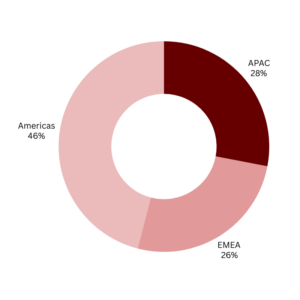
The WordPress community in Asia-Pacific is calling for change. Despite the region contributing 42% of WordPress core contributors and hosting nearly 40% of global WordCamps, local speaker representation at WordCamp Asia remains disappointingly low. WordCamp Asia 2024 featured only 29% APAC speakers, improving to 38% in 2025—well short of the organizers’ 60% target and the WordPress Handbook’s recommended 80%.
The justification that Asia needs speakers from other regions doesn’t hold water when you consider that Asian speakers rarely appear at US or European WordCamps, and livestreams work perfectly well for accessing global content. With Mumbai hosting the 2026 event from April 9-11, organizers have an opportunity to showcase the stories, innovations, and experiences from a region that’s genuinely driving WordPress forward.
As the community pushes for better representation, attention turns to how WordPress itself is preparing for an AI-powered future.
WooCommerce Embraces the AI Shopping Revolution
WooCommerce is positioning itself at the forefront of “agentic commerce”—a future where AI assistants handle shopping tasks autonomously. Starting with WooCommerce 10.3 this month, store owners gain access to the new MCP (Model Context Protocol) that lets AI tools like Claude directly manage products and orders. This isn’t just about backend efficiency; it’s about preparing for customers who’ll never visit your actual website.
The vision extends beyond store management (The Repository). WooCommerce is testing solutions with Google and Stripe to enable AI agents to discover products and complete secure transactions on behalf of users. Built on WordPress’s open-source foundation and the new Abilities API, these tools ensure the entire ecosystem—not just WooCommerce—can adapt to AI-driven shopping behaviors.
While WooCommerce charts its AI course, the WordPress community continues processing the fallout from a challenging year.
Matt Mullenweg Opens Up About Leadership and Lawsuits
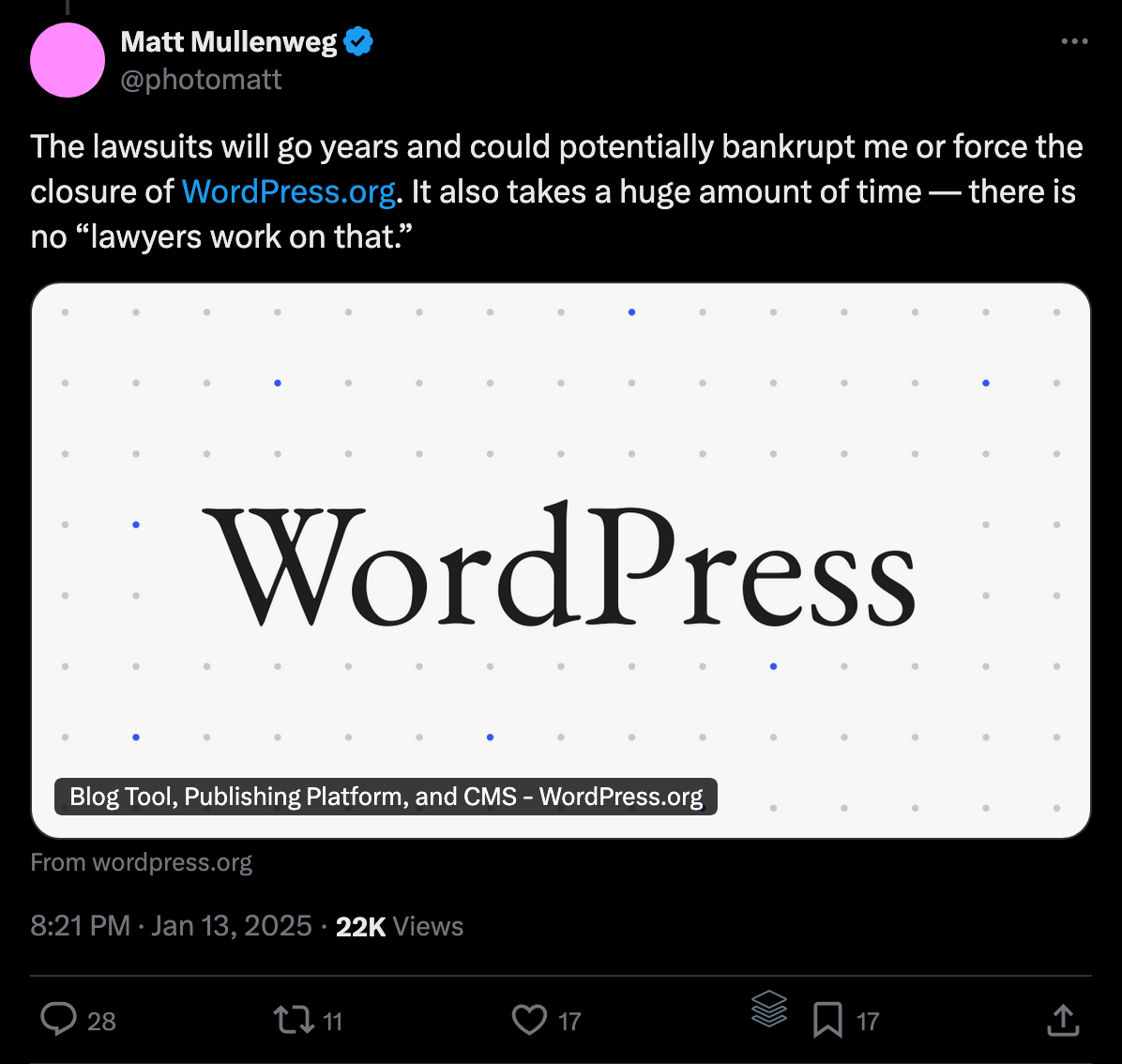
In a revealing Crossword interview, Matt Mullenweg addressed the elephant in the room: his controversial “WordPress.org belongs to me personally” comment and the WP Engine conflict that’s divided the community. When pressed about the stress his decisions placed on contributors, including fears of being banned, Mullenweg stood firm, calling it necessary pruning—though he did offer an apology to those caught in the crossfire.
His biggest takeaway from the year? The American legal system’s capacity to be “weaponized” through expensive discovery processes. While hosts Jonathan Wold and Luke Carbis hoped for deeper reflection on community impact, Mullenweg focused on litigation lessons and pointed to WordPress 6.9’s success as validation. He also surprised many by questioning whether the REST API should have been included in core, suggesting GraphQL might have been better.
Speaking of community impact, recent events have tested the very foundation of trust that WordPress events are built upon.
WordPress Community Faces Trust Challenge After Fund Misappropriation
WordPress Community Support revealed that a 2024 WordCamp organizer misappropriated approximately $734 in surplus funds for personal use. The individual, who managed funds locally rather than through WPCS, failed to respond to multiple recovery attempts and repayment plan offers. As a result, they’ve been permanently banned from WordPress events and their .org account, with a legal report filed with local authorities.
In response, WPCS will now distribute Global Sponsorship Grants in smaller payments—initial deposits first, then additional funds as attendance numbers clarify. Matt Mullenweg pushed back on this change, urging the program not to “punish all organizers for one bad actor” and to maintain default trust. The incident highlights the delicate balance between trust and accountability in community-run events.
From financial accountability to creative influence, the WordPress ecosystem relies on diverse voices to thrive.
YouTube Creators Bridge WordPress to the Next Generation
At a recent “Campfire Chat,” prominent WordPress YouTubers discussed their crucial role in shaping the ecosystem’s future. With individual creators often reaching more viewers in a day than official WordPress channels manage in weeks, personalities like Jamie Marsen (180K subscribers) are becoming the primary educators for new users. The panel emphasized authenticity over corporate messaging—viewers connect with real people sharing genuine experiences, not polished brand content.
The creators see themselves as bridges between WordPress and the 5 billion people consuming video content online. Their mission? Sell the open-source vision to Gen Z by emphasizing data ownership and platform independence. They’re advocating for free training days at WordCamps and university outreach to capture younger users where they are—on video platforms, not in documentation.
P.S. — If these stories resonated with you, forward this to someone who needs to hear them. And if you have a story about why you’re still here, hit reply and tell us. We read every one.
Thanks for reading WPMore!! This post is public so feel free to share it.
New features coming, funding discussions heat up, and WordCamp scheduling woes
Hello, my lovely WordPressers,
It’s been 126 days since I last sent a newsletter issue. Lots of things happened in these days. I will start curating the WordPress community news again every week, expect to get a minimum of 2 emails every month from me.
Thank you to those who subscribed in the meantime.
Welcome to this month’s WPMore newsletter issue 28,
WordPress is buzzing with activity this week. From exciting new features in the upcoming 6.9 release to heated debates about funding and community sustainability, a lot is happening that affects every WordPress user. Let’s dive into what’s shaping the platform and community you rely on.
Thanks for reading WPMore!! Subscribe for free to receive new posts and support my work.
In this Issue:
WordPress 6.9 brings hidden blocks, simplified editing, and expanded command palette features
Drupal founder argues governments should fund open source projects like public infrastructure
WordCamp 2026 schedule creates a coordination nightmare with three flagship events in 4.5 months
Nick Hamze’s post reignites the debate about WordPress losing its “cool factor” to newer platforms
WordPress Foundation seeks mentors for university student contribution program
WordPress 6.9 Brings Hidden Blocks and Simplified Editing
WordPress 6.9 is shaping up to be a significant release, with several features designed to make your editing experience smoother. The ability to hide blocks is nearly ready, giving you better control over what appears in your content. The command palette is expanding beyond the editor to work across your entire dashboard, making it faster to navigate your site’s admin area.
Block commenting is getting refined with bug fixes and improved accessibility, while new experimental blocks like accordion, breadcrumbs, and tabs are being tested. Perhaps most interesting is the work on simplified site editing, which aims to reduce the overwhelming nature of the current site editor through either toggle modes or making patterns content-focused by default.
Open Source Needs Government Funding, Drupal Founder Argues
Dries Buytaert, founder of Drupal, is making waves with his call for governments to fund open source projects like public infrastructure. His argument centers on a striking statistic: replacing the most widely used open source software would cost $8.8 trillion, yet 96% of that value depends on just 5% of contributors.
Buytaert points out that governments worldwide rely heavily on open source software but contribute little back. The European Commission runs over 100 Drupal sites, France operates more than 1,000, yet most provide minimal upstream support. He proposes that governments track the health of critical projects, commit to long-term funding, and require vendor contributions in procurement contracts.
A small group of maintainers supports infrastructure used by millions
Government agencies use open source extensively but rarely contribute back
Public funding could stabilize critical projects at relatively low cost
This debate has direct implications for WordPress users, as the platform faces similar sustainability challenges with its vast ecosystem of plugins and themes.
The WordPress community is grappling with a scheduling problem that could impact everyone who attends conferences or works for companies that sponsor them. All three flagship WordCamps—Asia, Europe, and US—are crammed into just 4.5 months in 2026, creating logistical headaches for organizers, sponsors, and attendees.
Taco Verdonschot breaks down why this matters: organizing a flagship WordCamp takes 9-12 months of work, major venues need to be booked years in advance, and the compressed schedule puts enormous pressure on everyone involved. WordCamp US 2026 in Phoenix during August presents additional challenges with extreme heat and vacation season timing.
The financial impact is significant too. Companies that normally sponsor all three events may have to choose just one or two, potentially leaving organizers scrambling for funding. Individual attendees face the prospect of spending thousands of dollars in a few months if they want to attend multiple events.
Tight scheduling makes planning exponentially harder for volunteers
Sponsors may skip events due to budget and logistics constraints
Summer timing in Phoenix could reduce attendance significantly
WordPress’s “Cool Factor” Problem Gets Fresh Attention
WordPress’s “Cool Factor” Problem Gets Fresh Attention
Nick Hamze has reignited discussion about WordPress’s image problem with a post arguing the platform has “lost the cool kids” to newer tools like Webflow and Framer. His critique focuses on perception rather than technical capability, noting that while WordPress powers much of the web, it’s often seen as “legacy” in design circles.
The post struck a nerve, earning a repost from Matt Mullenweg and drawing responses from across the community. Mike McAlister from Ollie even offered to redesign WordPress.org to give it a more modern, confident feel. Joost de Valk from Yoast agreed with the assessment but argued the project needs an empowered marketing team and better product direction.
WordPress Foundation Seeks Mentors for Student Program
The WordPress Foundation is looking for experienced community members to mentor university students through its WordPress Credits program. This educational initiative connects students with real-world open source contribution opportunities over 13-18 weeks, requiring mentors to commit 2 hours per week.
Mentors will guide up to 5 students each, helping them navigate WordPress contribution processes and develop professional skills. The program aims to bridge the gap between academic learning and practical experience while building the next generation of WordPress contributors.
The foundation is building a global pool of mentors to match with students as more universities join the program. Currently, only a limited number of institutions participate, but expansion is planned.
Commitment is 2 hours per week for 13-18 weeks
Mentors guide students through real contribution projects
Program helps develop the next wave of WordPress contributors
This mentorship opportunity represents a chance to give back to the community while helping shape WordPress’s future through new talent development.
Whether it’s technical improvements, funding sustainability, or community coordination, the decisions made now will shape WordPress for years to come. What do you think about these developments?
P.S. — If these stories resonated with you, forward this to someone who needs to hear them. And if you have a story about why you’re still here, hit reply and tell us. We read every one.
Thanks for reading WPMore!! This post is public so feel free to share it.
WordCamp Europe defied the odds, banned developers found their way back, women stepped into leadership across 25+ countries, and PressConf proved vulnerability beats posturing.
The WordPress community you thought was broken? It’s stronger than we knew.
Hey there,
I’ll be honest.
I almost didn’t know how to start this newsletter. WPMore exists to bring you the stories that matter in WordPress, the ones that go beyond plugin updates and hosting deals to show you what’s really happening in our community. And lately, what’s been happening has been… a lot.
We’ve watched legal battles play out in public. We’ve seen longtime contributors banned without explanation. We’ve wondered if the community we’ve invested years of our lives in would survive intact. There were moments when writing about WordPress felt less like celebrating a platform and more like documenting a breakup.
But then something funny happened as I put together these stories. In Basel, I found organizers who refused to let controversy derail WordCamp Europe. In Bangladesh and beyond, I discovered women stepping into leadership roles for the first time. In Arizona, I saw business owners choosing vulnerability over posturing. And in one developer’s painful account of being banned, I found a reminder that our community’s strength isn’t in its perfection—it’s in our willingness to keep showing up for each other.
These aren’t feel-good stories manufactured to make us forget the hard stuff. They’re real accounts of real people navigating real problems. And somehow, that makes them more hopeful than any corporate PR statement ever could.
Thanks for reading WPMore!! Subscribe for free to receive new posts and support my work.
WordCamp Europe 2025: How Basel Became a Symbol of Community Strength
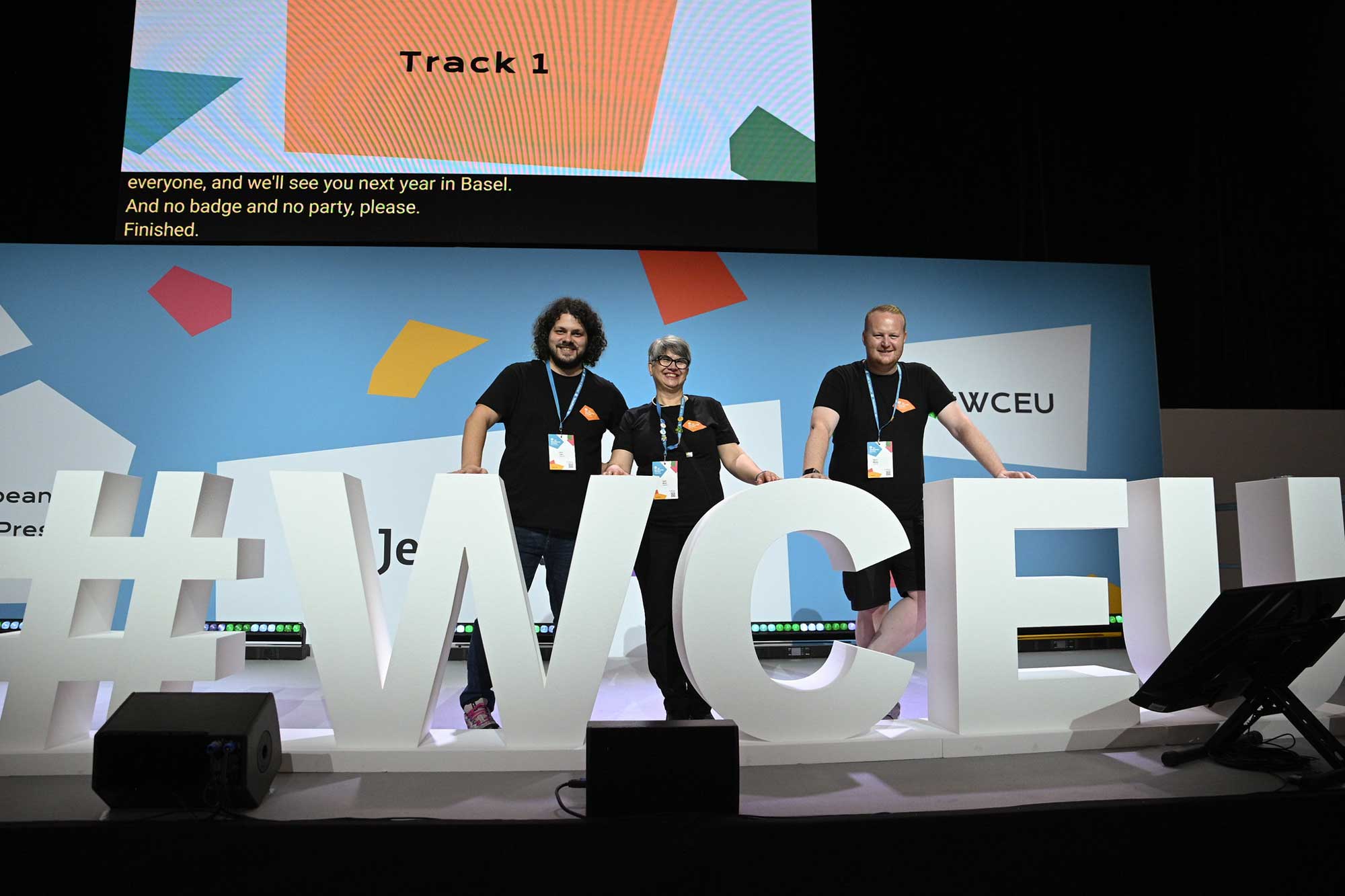
WordCamp Europe is happening June 5-7 in Basel, Switzerland, and honestly, the organizers deserve a medal just for keeping it together this year. Lead organizers Laura Sacco, Steve Mosby, and Uros Tasic managed a 90-person organizing team through one of the most turbulent periods in WordPress history.
The numbers tell part of the story: around 2,000 attendees are expected, which is better than anyone dared hope when planning began. Switzerland’s reputation for high costs initially worried organizers, but they’ve worked hard to make the event accessible. Free tram travel comes with your Basel Card, you can bike in from France or Germany (literally across the border), and there are plenty of budget-friendly food options beyond the tourist traps.
What impressed me most was how the team handled the WP Engine-Automattic dispute. They held three town hall meetings—unrecorded, judgment-free spaces where organizers could voice concerns. “We’re not here to pick sides,”Uros explained.“We’re here to organize a community event.” When team members felt uncomfortable continuing, leaders made it clear they could step back without consequences.
The speaker lineup reflects deliberate choices around inclusion—something that took years of learning from past criticism. “This is the first year I can remember where we haven’t had complaints about inclusion,”Laura noted. They’ve also built in more networking breaks because, as Steve put it, “the most valuable part of WordCamp is the people.”
For those still on the fence about attending: visa issues have been challenging (Switzerland isn’t in the EU), but the team issued over 200 invitation letters to help. And the next location is already being planned with affordability and visa accessibility as top priorities.
Edit: but actually Switzerland IS in the Schengen area, which is the same for ALL countries in it, same rules, same requirements, and not more difficult than with any other Schengen country (EU + Iceland, Liechtenstein, Norway, and Switzerland)
The local team received the endorsement of the Swiss Confederation, as shown on the WordCamp Europe website. The number of visa letters sent by the Attendees team is similar to that of previous years.
What It’s Really Like to Be Banned from WordPress.org
Chris Reynolds discovered he was banned from WordPress.org on January 6th. No email, no notification, no explanation—just suddenly locked out of an account he’d held for 17 years. His story offers a rare inside look at what happened to dozens of community members during the height of the WP Engine controversy.
The ban appeared to stem from adding a clown face emoji to one of Matt Mullenweg’s Slack posts. Chris explains the context: during COVID, he and his partner used that emoji to react to wild, unpredictable situations—not as a personal attack, but more like “things are getting out of hand.” Without conversation or context, the reaction was apparently interpreted as hostile.
The practical consequences were serious. When Chris’s Progress Bar plugin received a vulnerability disclosure through Patchstack’s bug bounty program, he couldn’t push the fix to WordPress.org where over 1,000 users had downloaded it. He could only update it on GitHub and Packagist, leaving repository users vulnerable. This highlighted a concerning precedent—earlier, Matt had taken control of WP Engine’s Advanced Custom Fields plugin over a similar security issue.
The personal impact ran deeper. “I’ve never felt less like a valued member of the WordPress community than when my account was blocked with no justification,” Chris wrote in his blog. It led him to DrupalCon Atlanta, where he found a surprisingly welcoming community facing similar challenges but handling them differently.
Chris was among 32 people whose bans were lifted last week—again, without communication or explanation. He’s relieved but still processing the whiplash. His experience raises important questions about due process and communication in our community leadership.
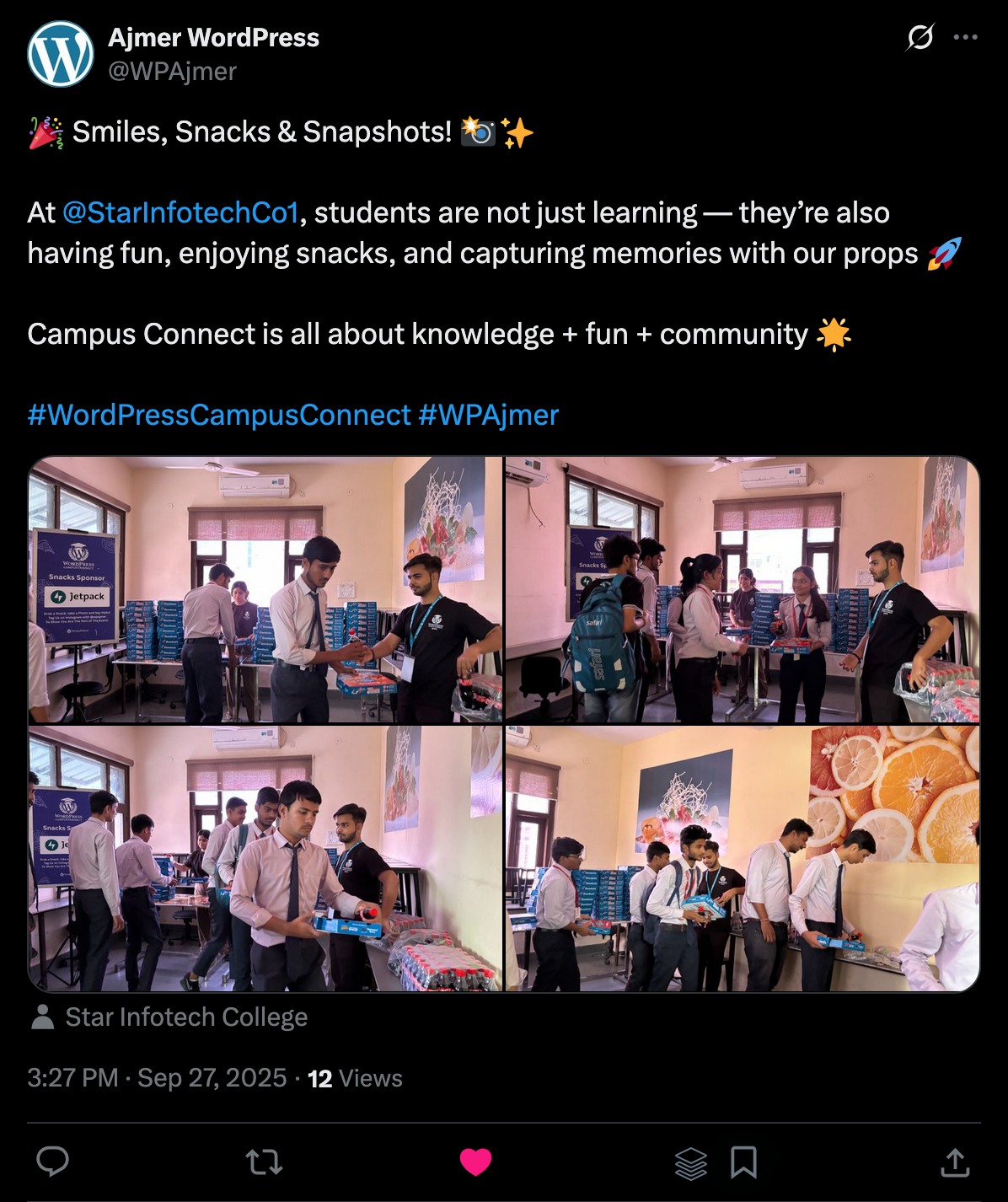
Sometimes the best initiatives start with simple conversations. When Aditya Kane shared his sister’s idea for an all-women WordPress meetup in Mumbai, it sparked something bigger. Pooja Derashri took that concept global, and the result was over 25 International Women’s Day events across the WordPress community.
The logistics were challenging. Pooja personally reached out to 30-40 WordPress communities worldwide, many of which had never organized women-led events before. Some struggled to find female speakers or volunteers. But the persistence paid off, creating a powerful network of events from Ajmer to Nicaragua to Madrid.
The impact went beyond single-day celebrations. In Nicaragua, the event “was entirely led and organized by women, most of whom had never led a community event before.” WP LATAM trained four new organizers who can now run events in their local communities. WP Bhopal held sessions in both Hindi and English for better accessibility, drawing everyone from students to entrepreneurs to a fifth-grade schoolgirl.
What struck me most was how these events created lasting change. As WP Pune organizers put it: “Our hope is that this event will inspire even more women to step into the spotlight, whether by organizing sessions, speaking at conferences, or leading teams in the tech industry.”
This wasn’t just about International Women’s Day—it was about reshaping what leadership looks like in WordPress communities. When we create space for new voices to lead, we don’t just run better events; we build stronger communities.
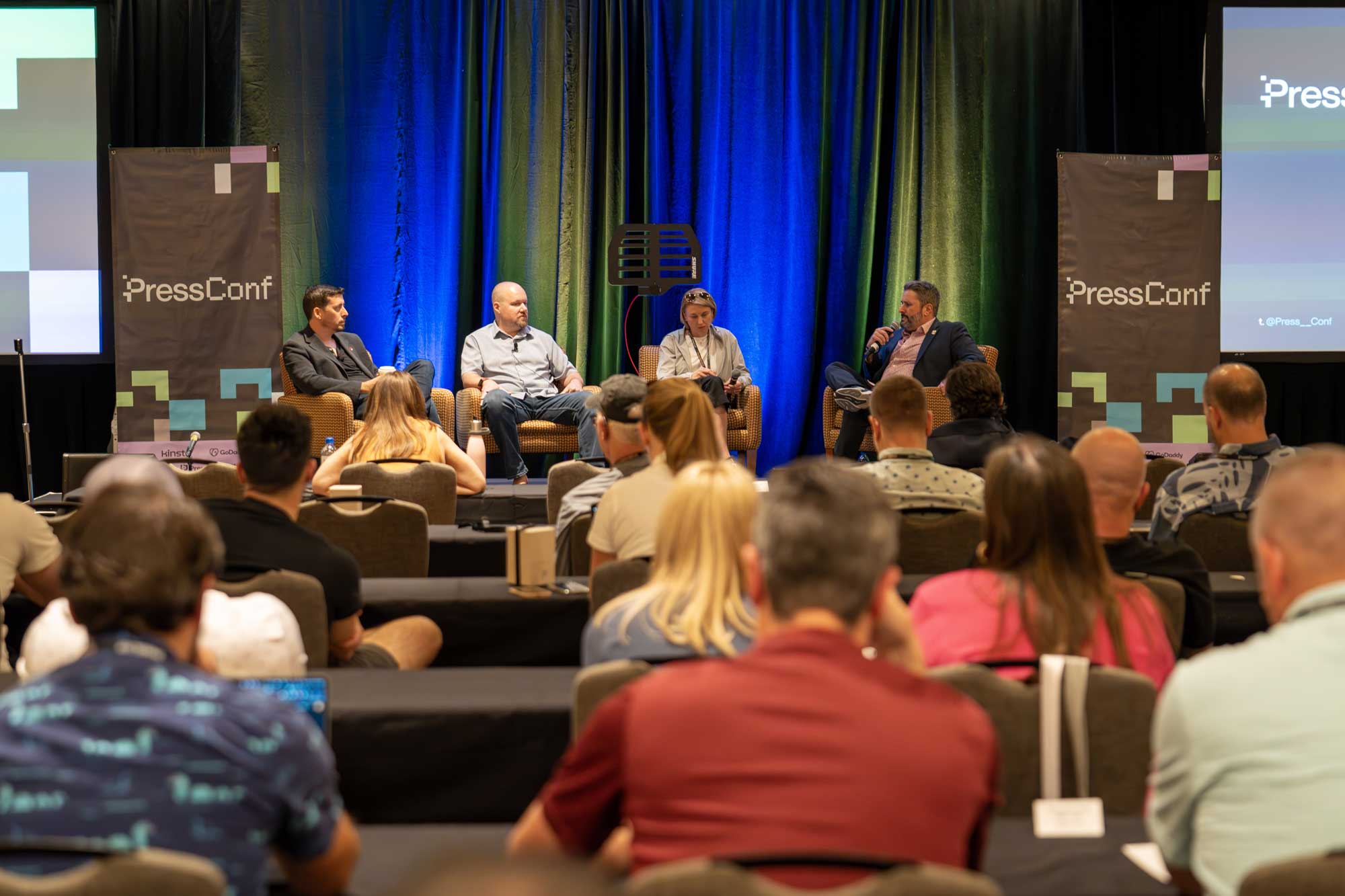
Sometimes the most important conversations happen when the cameras are off. PressConf wrapped up last weekend in Tempe, Arizona, and by all accounts, it was exactly what the WordPress business community needed—a chance to reconnect, be vulnerable, and remember why this all matters.
The numbers tell part of the story: 140 people, no recordings, and an atmosphere more like a retreat than a typical conference. Organizer Raquel Manriquez and her team created something special at the Tempe Mission Palms, the same venue that housed PressNomics for years.
The emotional openness surprised some attendees, especially international visitors not accustomed to American-style vulnerability in business settings. Miriam Schwab from Elementor delivered what many called the most powerful session, sharing deeply personal stories about balancing career, family, and the ongoing impact of war in Israel. Her talk ran 30 minutes over, but nobody left.
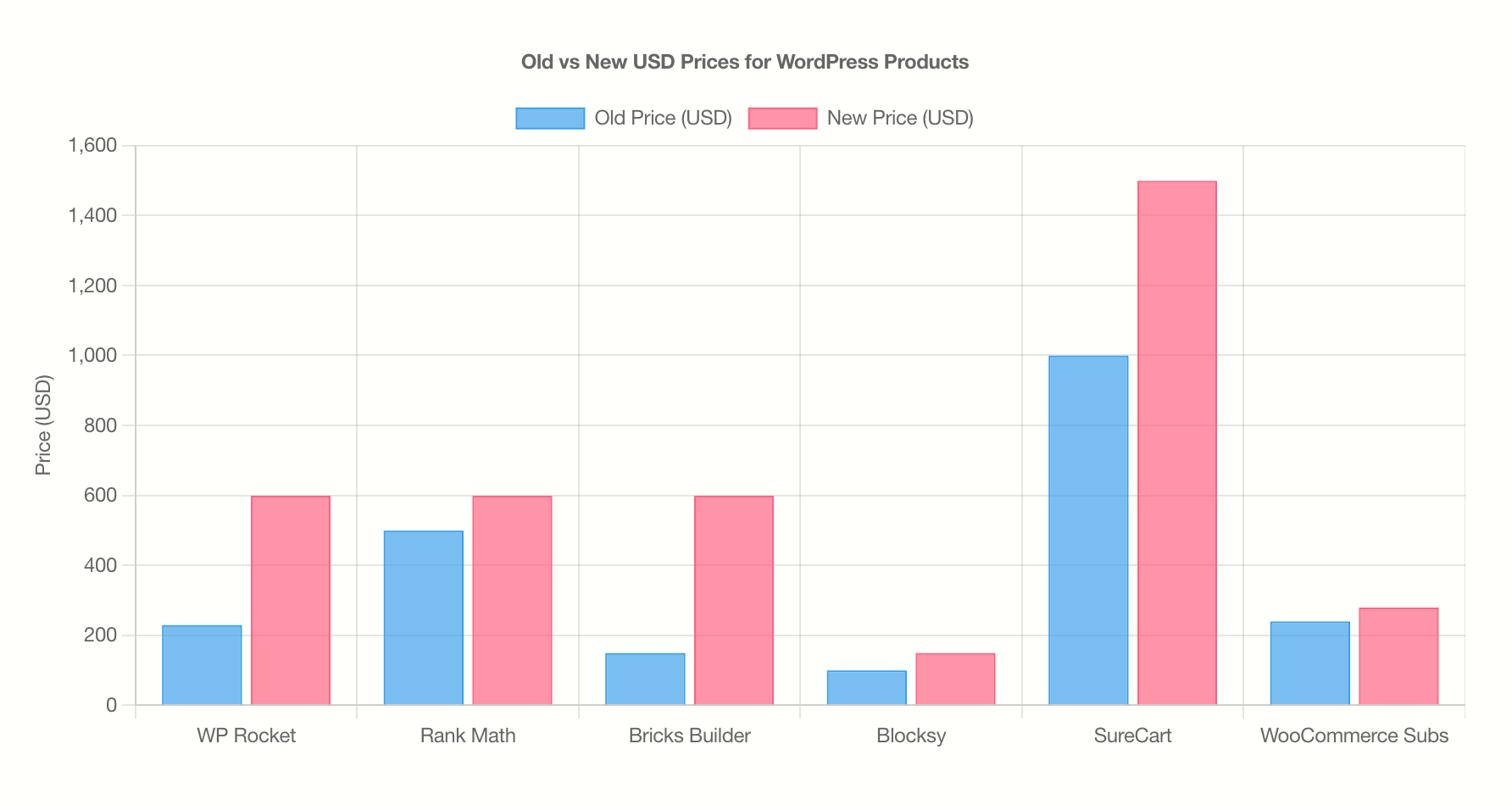
The WordPress Price Shock: How Soaring Costs Are Squeezing Millions of Website Owners
Your monthly WordPress expenses just doubled—and you’re not alone. Across the globe, millions of website owners are facing a harsh new reality: the tools that power nearly half the internet are becoming increasingly expensive, and fast.
From WP Rocket’s staggering 162% price jump to Bricks Builder’s eye-watering 302% increase, the WordPress ecosystem is experiencing unprecedented price inflation that’s leaving users scrambling for alternatives. But here’s what makes this crisis particularly brutal—while Silicon Valley startups might shrug off these increases, small business owners in developing nations are getting hit with a devastating double punch: massive price hikes combined with weakening local currencies.
If you’ve been wondering why your favorite WordPress plugins suddenly cost more than your monthly rent, or if you’re a developer watching clients abandon projects due to ballooning costs, this deep dive reveals exactly what’s happening—and more importantly, what we can do about it. The numbers don’t lie, and the impact is bigger than you think.
→ Post Status Acquires WP Speakers (poststatus.com) — Michelle Frechette’s long standing community driven project with 500+ WP speakers profiles found a new home.
→ Matt Mullenweg Settles Caregiver Lawsuits Days Before Trial (therepository.email) — Claims of wage theft, discrimination, retaliation, and defamation brought by two former caregivers against WordPress co-founder Matt Mullenweg have quietly settled after a nearly three-year legal battle.
→ WordPress Market Share, Statistics, and More (wordpress.com) — this article explores the platform’s market share in detail, as well as its versatility, reasons for success, and what keeps it ahead of the curve two decades after it launched.
→ Mary Hubbard Moves to Rebuild Trust After WordPress.org Bans (therepository.email) — In a new Make WordPress post, Executive Director Mary Hubbard suggests moderation reforms, such as an appeals process, clearer Slack guidelines, and rotating roles, following months of community uncertainty over WordPress.org bans.
→ Freemius: Growing Beyond WordPress (thewpminute.com) — In this episode of the WP Minute+ Podcast, Matt welcomes Vova Feldman, the founder and CEO of Freemius, to discuss how the company is expanding beyond its roots in the WordPress ecosystem.
→ WordPress.org Plugin Submissions Surge 87% Amid Rise in AI Tools (therepository.email) — With plugin submissions up 87% and AI tools playing a bigger role in development, the WordPress Plugin Review Team is evolving its processes to keep pace — without compromising plugin or review quality.
→ New Social Icons for WordPress (make.wordpress.org) — WordPress.org now covers X, Bluesky, Mastodon, Threads, Facebook, Instagram, Linkedin, TikTok, YouTube, and Tumblr.
→ The 3 C’s of Becoming a WordPress Professional (thewpminute.com) — after years of working with WordPress businesses of all sizes, Matt found that real professionalism comes down to three simple but powerful principles
I keep thinking about something Uros from the WordCamp Europe team said: “We didn’t have big hopes at the start, but now we believe again.”
That sentence has stuck with me for days. Not because it’s particularly profound, but because it’s so damn honest. Most of us didn’t have big hopes at the start of this year either. How could we? Every week brought new drama, new uncertainty, new reasons to wonder if WordPress was worth our continued investment.
But here we are, still building. Still organizing events. Still writing code. Still showing up for each other in Slack channels and GitHub issues and conference hallways. Not because everything is perfect—it’s not—but because something about this community keeps pulling us back.
Maybe it’s the memory of that first WordCamp where strangers became friends. Maybe it’s the satisfaction of solving a tricky problem with custom post types. Maybe it’s just the stubborn belief that the web should be something we can all contribute to, not just consume.
Whatever it is, it’s stronger than the noise. Stronger than the controversies. Stronger than the disappointments.
Chris Reynolds, after months of being inexplicably banned, wrote: “I’m still here, so that’s a start.” That’s not resignation—it’s resolve. And it’s everywhere in these stories.
We’re still here. We’re still building. We’re still WordPress.
P.S. — If these stories resonated with you, forward this to someone who needs to hear them. And if you have a story about why you’re still here, hit reply and tell us. We read every one.
Thanks for reading WPMore!! This post is public so feel free to share it.
Plus 70% of New WordPress Themes Still Using Classic Architecture, WordCamp Europe 2025 Diversity Scholarship Winner
Hello WordPress enthusiasts!
Welcome to this month’s WPMore newsletter issue 26, where we bring you the most important developments in the WordPress ecosystem. This issue is packed with insights on WordPress security, community events, and theme development trends.
So grab your favorite beverage, settle in, and let’s explore what’s happening in the world of WordPress right now.
Thanks for reading WPMore!! Subscribe for free to receive new posts and support my work.
In this Issue:
WordPress Security in 2025: CRA Compliance Now Critical for Developers
WordCamp Asia 2026 Heads to Mumbai, But Visa Issues Create Barriers for Bangladesh & Pakistan
Matt Mullenweg on Succession: “I Don’t Want to Pass It to a Committee”
70% of New WordPress Themes Still Using Classic Architecture
Lua Salazar Receives WordCamp Europe 2025 Diversity Scholarship
WordPress Security in 2025: CRA Compliance Now Critical for Developers
The European Union’s Cyber Resilience Act (CRA) is now reshaping WordPress security practices. Having come into force in December 2024, the CRA will begin applying its first requirements in 2026, mandating that plugin and theme developers implement processes to notify authorities and users about vulnerabilities.
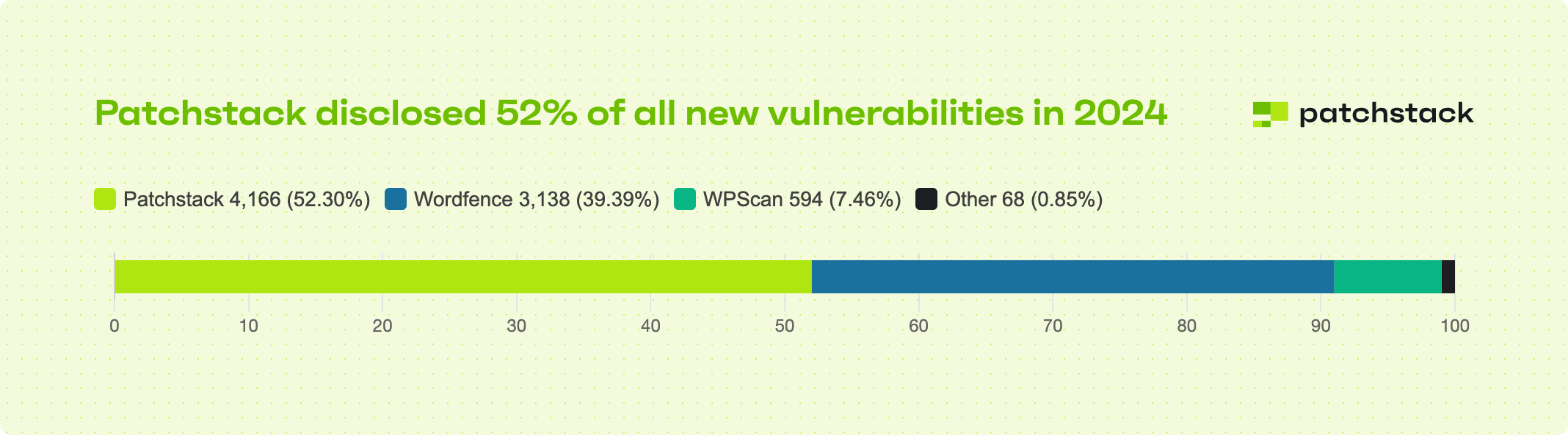
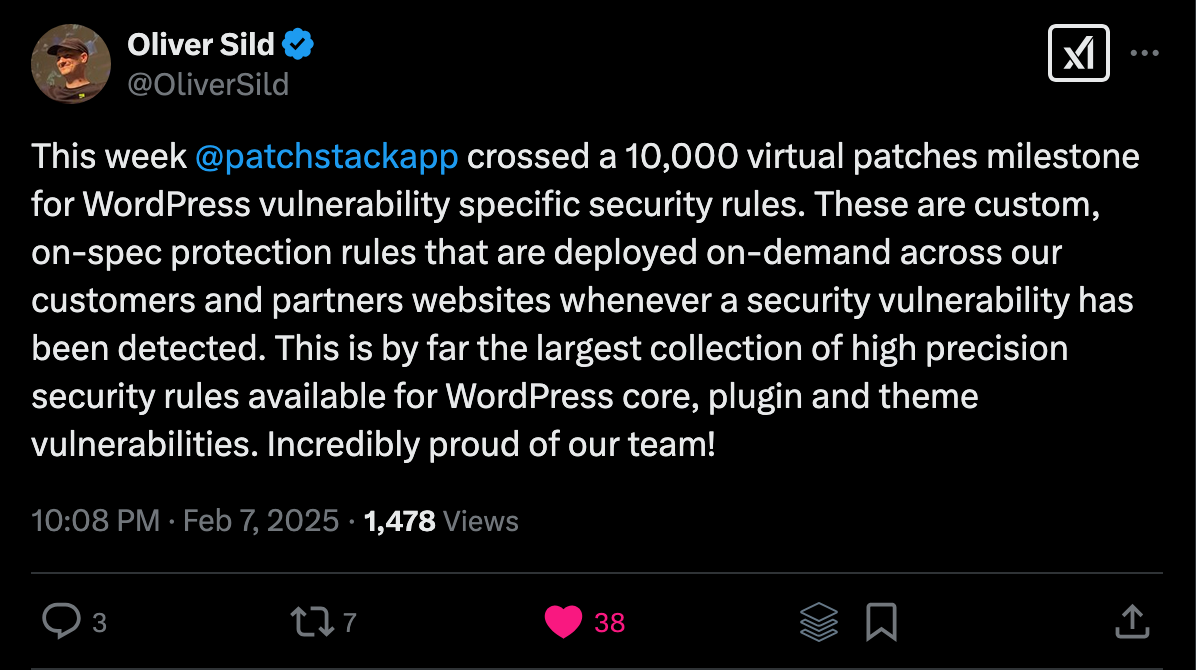
This couldn’t be more timely – 2024 saw 7,966 new security vulnerabilities in the WordPress ecosystem, a concerning 34% increase from 2023 reported by PatchStack. Of these, 96% were in plugins and only 4% in themes. Even more alarming, more than half of plugin developers failed to patch reported vulnerabilities before official disclosure.
The current community situation has further complicated matters. The ongoing dispute between Automattic and WP Engine that became public in September 2024 has fractured trust, with some WordPress sites being disconnected from WordPress.org updates. Many see governance and supply chain integrity as pressing security issues for WordPress in 2025.
With AI playing an increasing role in WordPress development, PatchStack is seeing several emerging risks:
AI-generated code introducing new vulnerabilities
Easier vulnerability discovery
Faster exploitation of vulnerabilities
Previously low-priority vulnerabilities becoming easier to exploit
For developers, implementing vulnerability management and virtual patching will be essential to comply with the CRA and protect their users.
WordCamp Asia 2026 Heads to Mumbai, But Visa Issues Create Barriers
Mumbai has been selected to host WordCamp Asia 2026, highlighting India’s growing WordPress community that has hosted 12 WordCamps this year alone. However, this exciting announcement has been tempered by concerns over diplomatic tensions between India and Bangladesh.
Since late 2024, India has suspended visas for Bangladeshi nationals, potentially preventing many WordPress contributors from attending. WPManageNinja CMO Faizus Saleheen raised this issue on social media, noting that even if visa processing resumes, clearing the backlog could take 3-4 months, making attendance difficult for many Bangladeshis.
Don’t forget to subscribe & support them, they do some amazing hard-hitting WordPress journalism.
Matt Mullenweg on Succession: “I Don’t Want to Pass It to a Committee”
Amid increasing calls for WordPress co-founder and Automattic CEO Matt Mullenweg to step down following his controversial battle with WP Engine, TechCrunch Reports Mullenweg has instead begun thinking about succession planning. In a recent episode of Lenny’s Podcast, he shared that he doesn’t want to pass what he’s built to a “committee,” but rather to another individual CEO who would continue to act as a steward for the WordPress community.
Mullenweg described the role as being “more like a mayor than a CEO,” where the person would ultimately be accountable to users and contributors. He emphasized that checks and balances exist naturally, as “the community could leave, they could fork the software, people could change.”
He also highlighted Automattic’s role in boosting WordPress adoption, noting how the free version of WordPress.com has introduced more than 100 million people to the software. Mullenweg described this collaboration between for-profit Automattic and open source WordPress.org as “a really informed model” that many new startups are now adopting.
70% of New WordPress Themes Still Using Classic Architecture
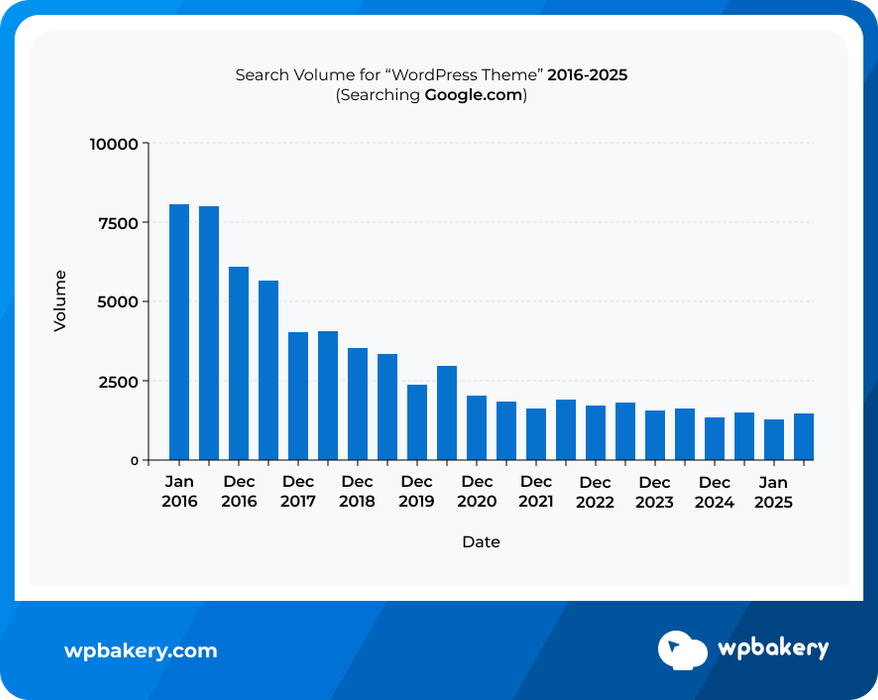
Despite the push toward Full Site Editing (FSE), classic themes continue to dominate WordPress theme development. According to recent data from WordPress Themes Trac, 70% of themes published in the WordPress directory over the last two years are still using the classic architecture rather than block-based FSE.
The analysis from WPBakery, which looked at 3,486 themes, found only 1,045 block-based FSE themes. However, there’s a clear upward trend in FSE adoption, with the percentage growing steadily. If the trend continues, FSE themes could reach 50% of new submissions by 2026.
Interestingly, the top theme authors are showing resistance to FSE adoption. Among the top 10 independent theme authors, 81% of their submissions are classic themes, with half not submitting any FSE themes at all.
Lua has been an active WordPress community member since 2019, currently contributing about 10 hours weekly to the Community Team and mentoring local events through the WordPress Latam Community. She works as a Community Manager and Project Manager, roles that align with her passions for technology and community engagement.
→ Join Alt Ctrl Org WordCamp event Friday Evening from 18:00 till 21:00 on June 6th in Basel to hear alternative talks on WordPress that you probably won’t hear at WordCamp.
→ WordPress.org Themes of 2024: Reflections & Stats (ILoveWP) – It’s harder than ever for new WordPress themes to stand out. In this article, Dumitru Brinzan dive into data from over 1,700 themes released on WordPress.org throughout 2024.
From Manila’s record-breaking event to a major lawsuit shaking the ecosystem—plus updates on plugin directory and open-source contribution debates. Don’t miss this issue!
Hi there, WordPress enthusiasts!
Welcome to the latest issue of WPMore. This time, we’re taking you to the heart of Manila for WordCamp Asia 2025, where over 1,400 attendees from around the globe gathered to celebrate, collaborate, and shape the future of WordPress. But that’s not all—we’ve also got the scoop on some pressing community issues, including a high-stakes legal battle and a fresh take on the Five for the Future program. Plus, there’s an important update for plugin developers you’ll want to catch.
Grab a coffee, and let’s get into it!
Thanks for reading WPMore!! Subscribe for free to receive new posts and support my work.
WordCamp Asia 2025 Wraps Up in Manila, Sets Sights on Mumbai for 2026
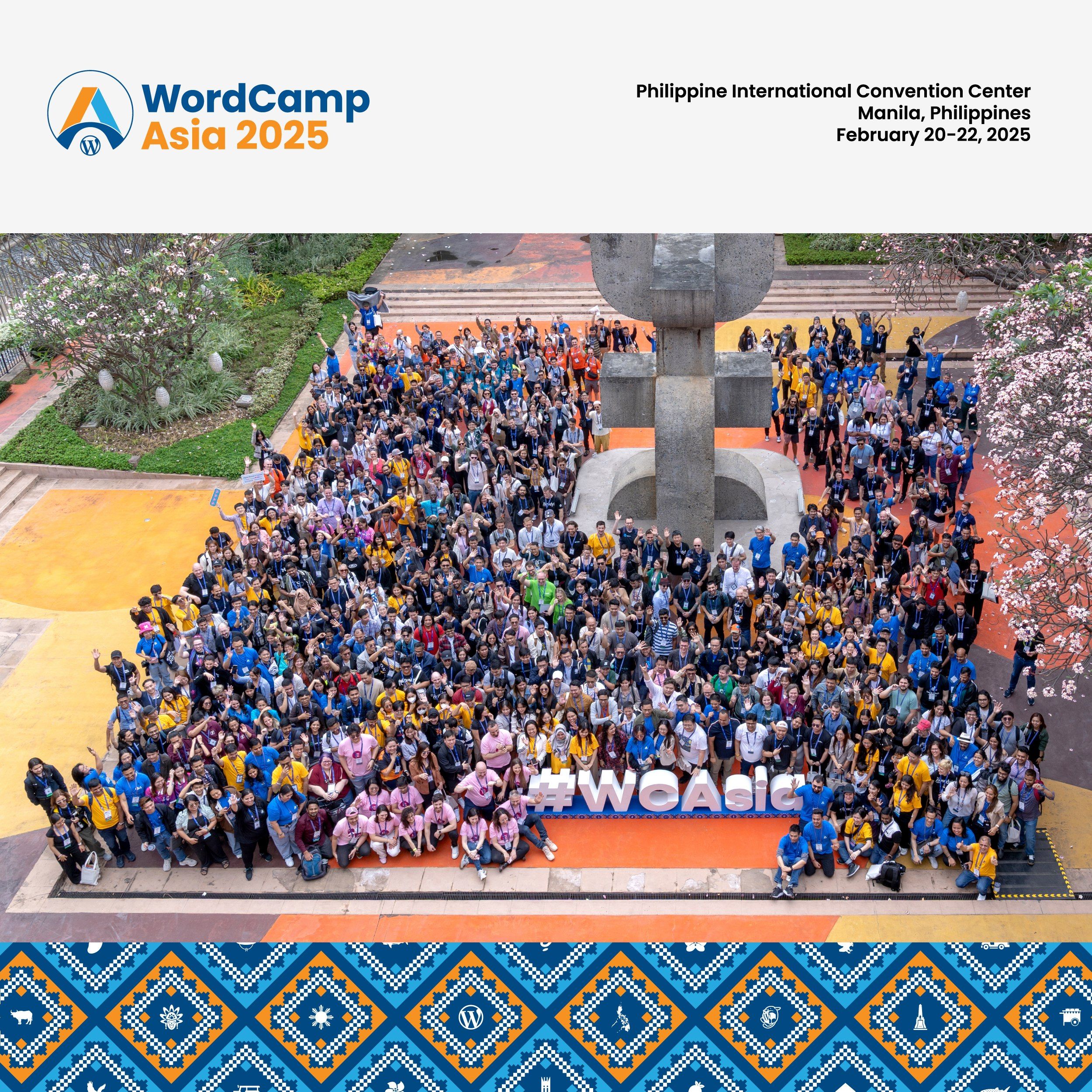
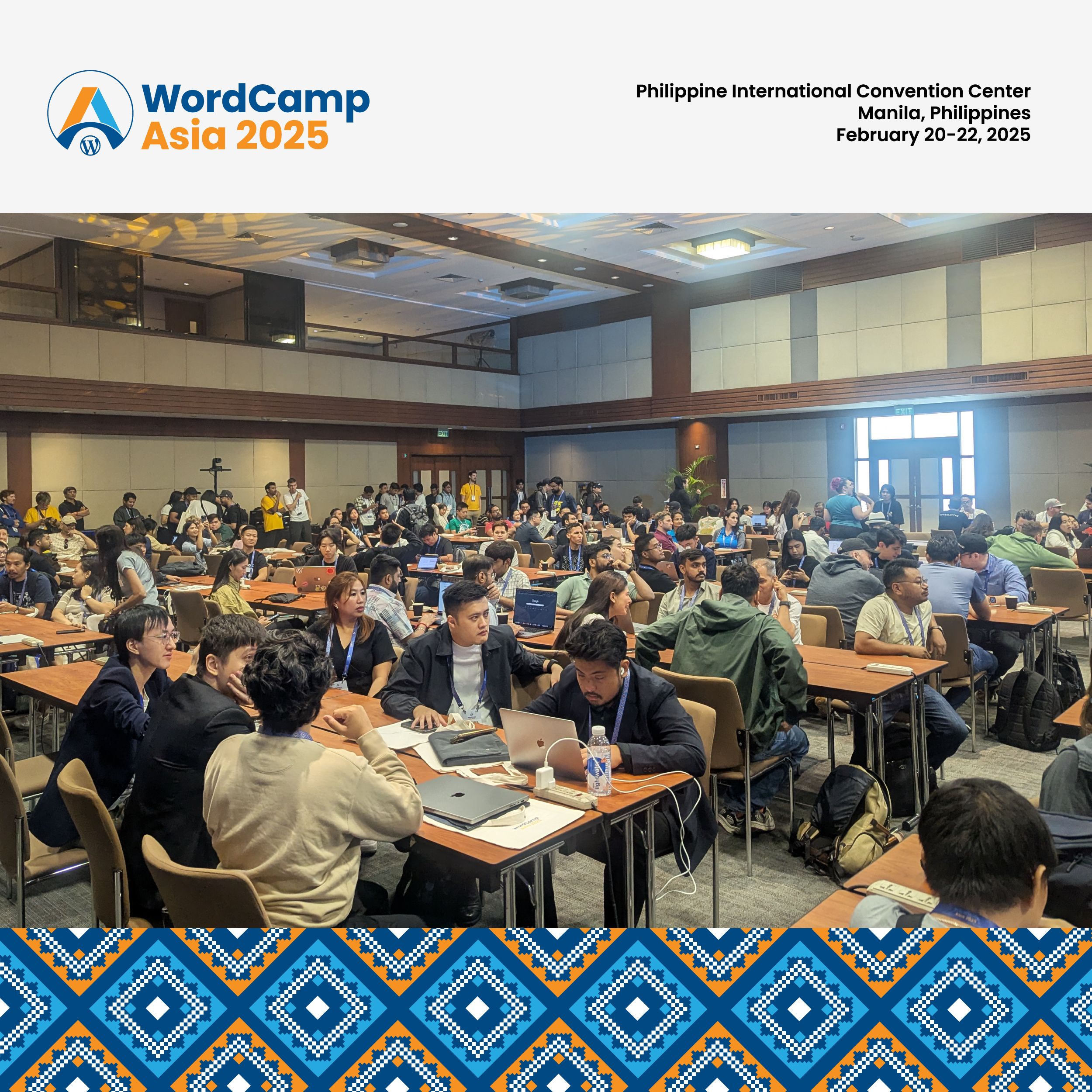
WordCamp Asia 2025 concluded last weekend at the Philippine International Convention Center in Manila, bringing together over 1,400 attendees from 71 countries, with nearly 15,000 more participating online. This marked the first flagship WordPress event since WordCamp US 2024.
The conference unfolded against the backdrop of Matt Mullenweg’s ongoing legal dispute with WP Engine, but in Manila, conversations focused primarily on innovation, WordPress’s role for entrepreneurs across Asia, and bringing fresh faces into the community—including through the new YouthCamp initiative for attendees aged 8-17.
Reflecting on the event, Mullenweg noted on his blog that it presented an “interesting contrast to US and EU WordCamps as well in that the audience is definitely a lot younger, and there’s very little interest in ‘wpdrama’ du jour.”
Contributor Day: The Heart of Community Collaboration
The three-day conference kicked off with Contributor Day, bringing together nearly 800 people—including 126 first-timers—who collaborated across 19 Make WordPress teams.
Key accomplishments included:
Core Team fixing a critical media bug and progressing on vertical text editing in Gutenberg
Polyglots Team translating over 4,000 strings with 66 contributors
Plugins Team onboarding new contributors and handling queue management
Themes Team clearing all new theme submissions
Documentation and Marketing Teams enhancing WordPress learning resources
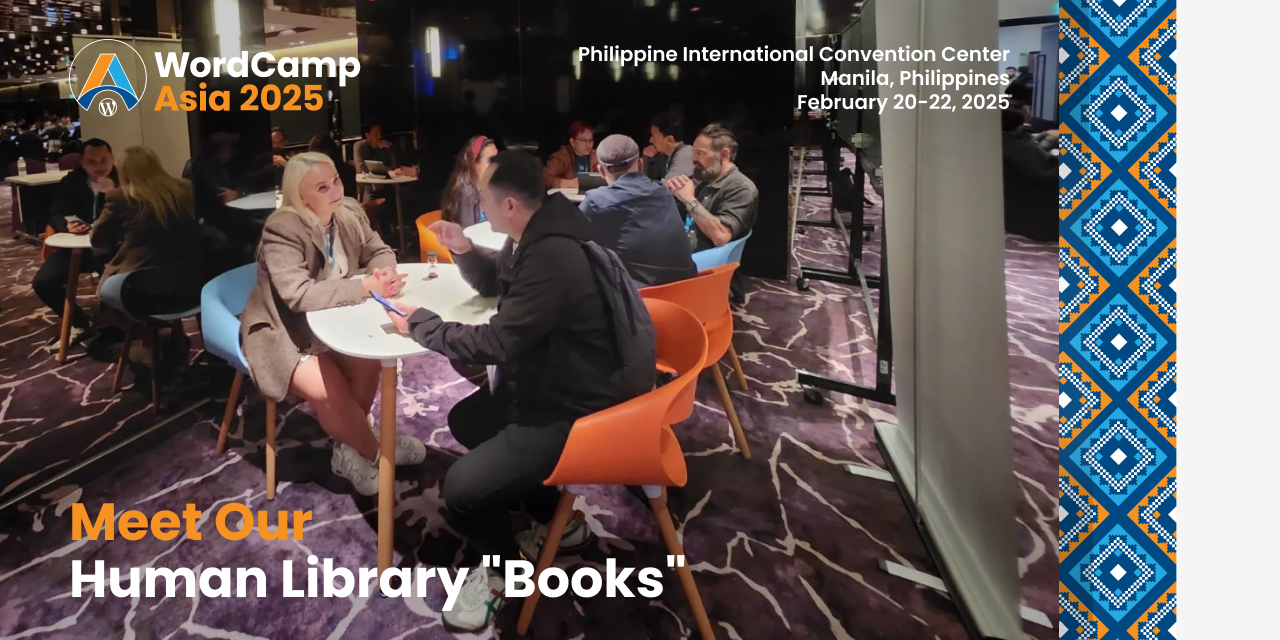
The “Human Library” feature was particularly popular, with 16 experts “books” available to share their experiences across 64 sessions.
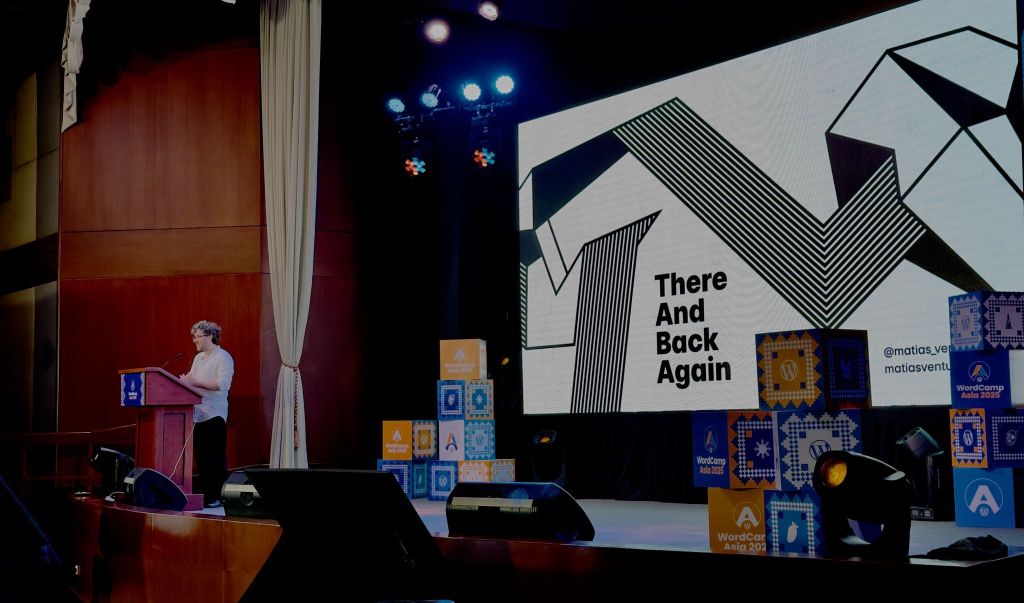
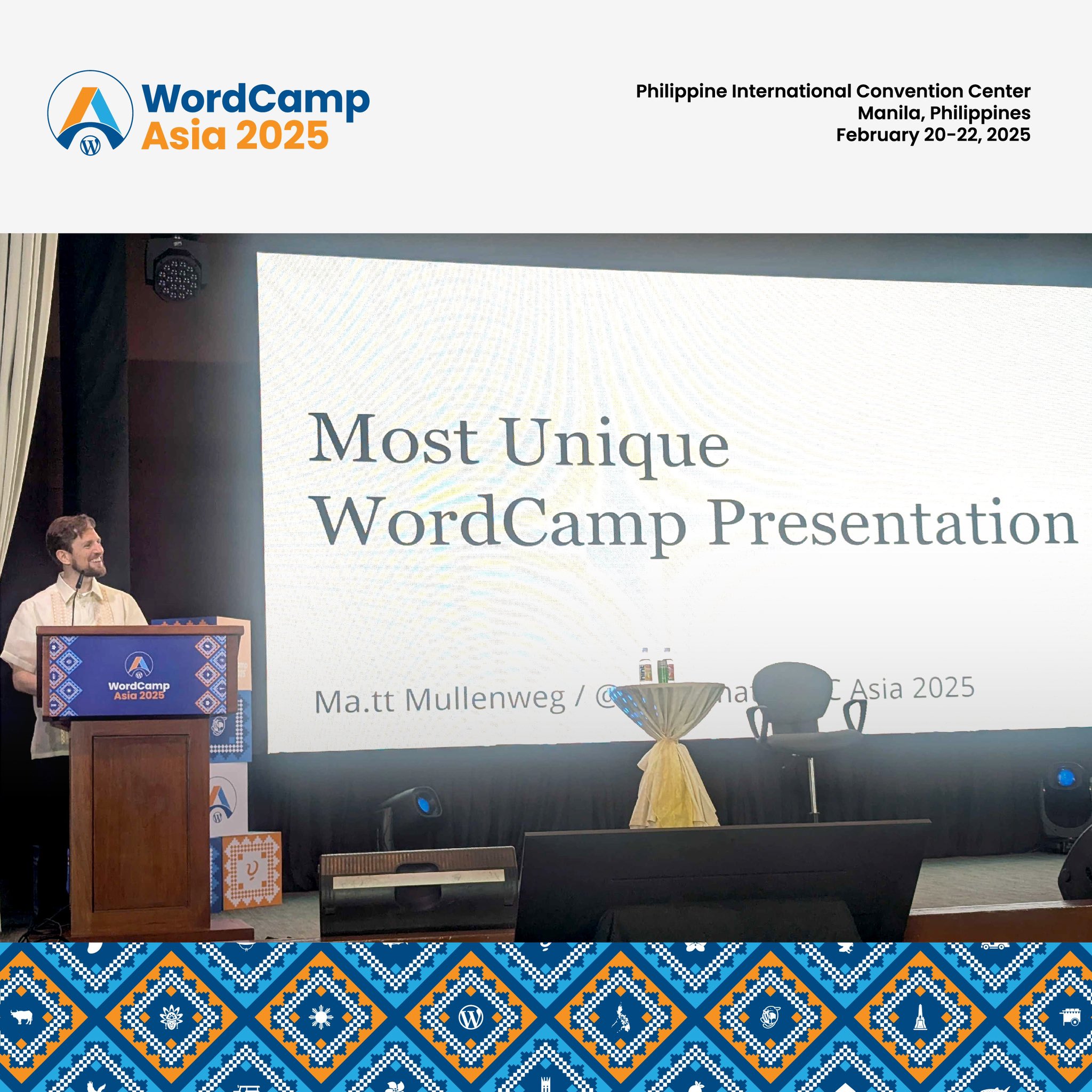
Closing the conference, Matt Mullenweg took the stage for his keynote and Q&A. When asked about the reduced contributions from Automattic to WordPress development, Mullenweg attributed it to the ongoing legal battle with WP Engine:
“Automattic is having to spend millions of dollars—per month, sometimes—to defend against these attacks from WP Engine. And with the court injunction, it’s just hard to stay motivated and to spare the resources to contribute so much. Now, [WP Engine] could end it tomorrow… But we can’t end it. We can only defend… So as soon as they stop that, we’ll get back to it.”
A tense moment came when Taco Verdonschot challenged Mullenweg about how open the project is to change, particularly given recent bans of community members. Mullenweg responded that talking about change“isn’t going to get you banned,” adding that it’s “other behavior” that leads to people being banned from WordPress.
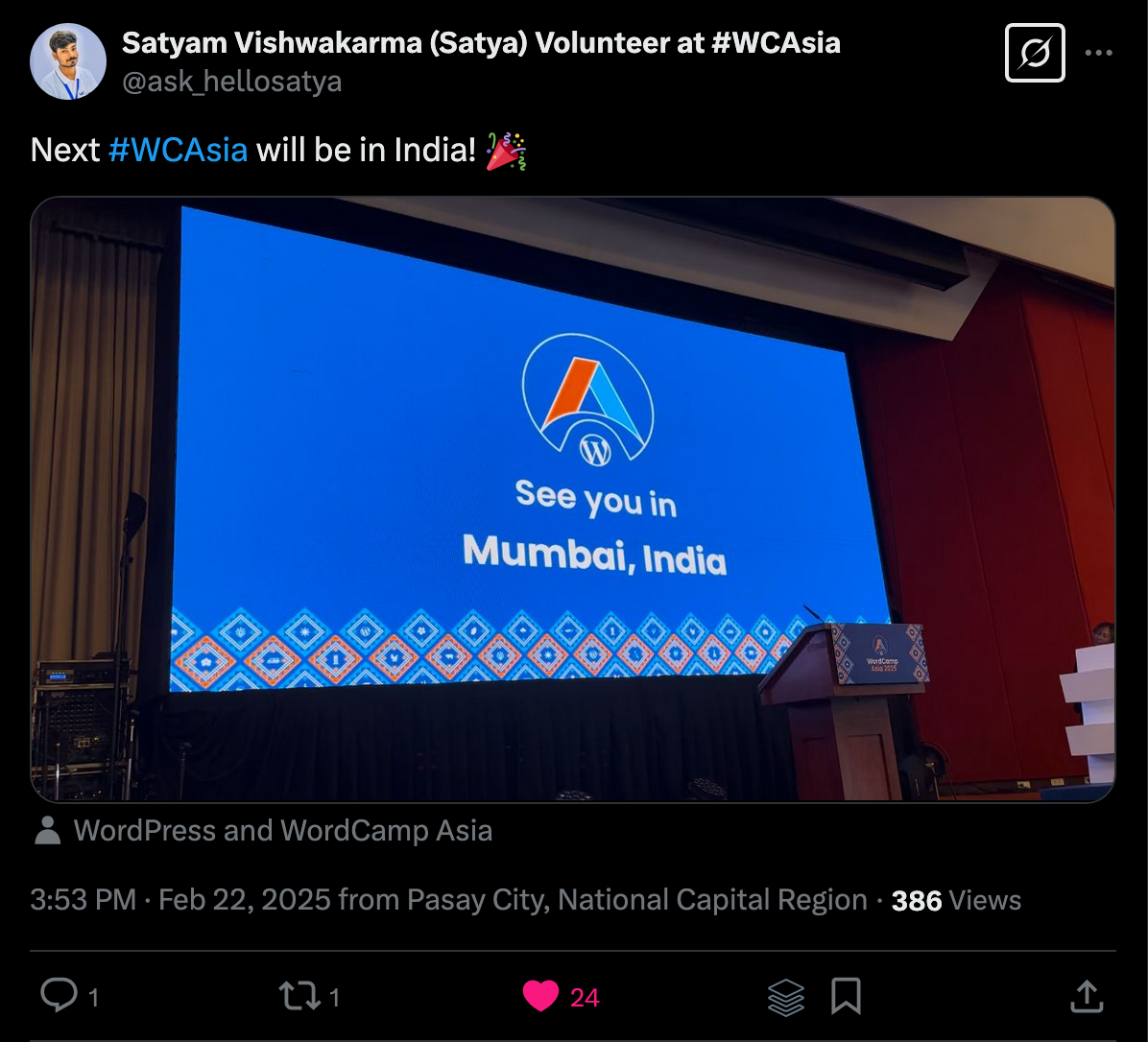
Mumbai to Host WordCamp Asia 2026
As the event concluded, organizers announced that Mumbai, India, will host next year’s flagship event.
India’s selection makes sense given its strong grassroots WordPress community—the country has already hosted three WordCamps this year in Ahmedabad, Kolhapur, and Kolkata. WordPress Meetup events in India lead global engagement, with in-person meetups in Ahmedabad and Mumbai regularly drawing 165+ attendees.
During his Q&A, Mullenweg suggested next year’s event could bring in 3,000–4,000 attendees, potentially making it the largest flagship WordCamp yet.
Automattic Faces Class Action Over WP Engine Dispute
The complaint alleges that Automattic deliberately sabotaged WP Engine’s business by blocking access to critical WordPress.org services, causing disruption, security risks, and financial harm. Filed in the U.S. District Court for the Northern District of California, the lawsuit accuses Automattic of multiple counts of tortious interference and violations of California’s Unfair Competition Law.
In “Challenging Five for the Future,” Sidler argues that the program disproportionately benefits Automattic and creates barriers for independent contributors. The former Audrey Capital employee claims that contributors without Automattic’s backing face significant challenges, while Automattic employees dominate leadership roles.
“In my experience, a perpetual problem within the WordPress core community is the ‘backchannels’ that exist, private spaces where contributors align on next steps. This is particularly acute with Automattic employees, which actively communicate in private spaces that do not include the community,” Sidler writes.
The update means that instead of plugin authors being able to display any name and link to any website, the attribution is now directly linked to the plugin owner’s WordPress.org profile, showing their display name as set on their profile.
Companies and teams can still maintain branded profiles, but all plugins owned by the same entity must use the same account. The changes apply retroactively to all existing plugins in the directory.
While only the plugin owner’s display name and profile will be shown under the plugin title, multiple contributors can still be listed in the “Contributors & Developers” section through the plugin’s readme file.
On other WordPress News
→ Introducing Preview Sites: Pushing the Limits of Collaboration with Studio – One of Studio’s most-loved features just got a big upgrade: Demo Sites, now named Preview Sites, are enhanced to better support your local development needs and simplify sharing progress with clients and teammates. (WordPress.com)
→ 2024 in Review and Transparency Report – Jack Arturo from WP Fusion shared his ongoing year in review of 2024, must read if you are interested in the WordPress plugin business. (wpfusion.com)
As we wrap up this issue, it’s clear that the WordPress community continues to evolve in both inspiring and challenging ways. WordCamp Asia 2025 demonstrated the vitality and growth of WordPress across Asia, with youth initiatives and a focus on the future that bodes well for the ecosystem.
At the same time, the ongoing legal tensions between key players in the WordPress space remind us that open source doesn’t necessarily mean freedom from conflict. The discussions around contribution models and project governance are important ones that will shape how WordPress develops in the years to come.
I encourage all of you to stay engaged with these conversations, consider ways to contribute that make sense for your skills and resources, and remember that the strength of WordPress has always been its community.
Discover the must-see events at WordCamp Asia, explore a new showcase of stunning WordPress sites, and learn why positivity still thrives in the community.
Hey WordPress friends,
✨ Welcome to WPMore! Your Snapshot of What’s Moving WordPress
Happy February, WordPress enthusiasts! Whether you’re gearing up for WordCamp Asia, hunting for design inspiration, or curious about the pulse of the WordPress community, this issue is packed with updates you won’t want to miss.
Let’s dive in!
Thanks for reading WPMore!! Subscribe for free to receive new posts and support my work.
🚀 WordCamp Asia 2025: Side Events & Solutions Spotlight
But wait—there’s a new addition this year: Solutions Spotlight! These 10-minute lightning talks from top sponsors like GoDaddy, Elementor, and Yoast will deliver quick, actionable insights during breaks at the Sponsors Hall stage. Highlights include:
GoDaddy: Maximize Your Agency’ Potential
Elementor: Build Sitemaps and Wireframes in Minutes
🎨 WP Gallery Launches: A Block Editor Design Showcase
Paris-based WP Gallery just debuted wp.gallery, a curated collection of the best WordPress block editor websites. Featured projects include sites from global brands like the Ford Foundation and Boom, proving the block editor’s versatility for any project.
Key features:
Daily updates with fresh, trendsetting designs
Free submissions for agencies and creators to gain visibility
A custom block theme powering the gallery itself (meta, right?)
Co-founder Yann Collet says, “We want to inspire confidence—WordPress isn’t just powerful for big brands. It’s for everyone.”
💪 WordPress Sentiment Stays Strong—Despite the X Drama
Last fall, drama on X (formerly Twitter)—like the WP Engine vs. Automattic lawsuit and critiques of Matt Mullenweg’s leadership—made it seem like WordPress was in turmoil. But data tells a different story: 80% of sentiment across platforms like Facebook, LinkedIn, and YouTube remains positive.
X’s negativity peaked at 54% in October 2024 but rebounded to 82% by January.
Events like State of the Word drove 95% positive sentiment globally.
The community’s social following grew to 2.3 million, diversifying beyond X’s male-dominated, U.S.-centric audience.
Garofalo notes that while governance debates rage in niche spaces like Post Status Slack, most users “just happily use the block editor” without worrying about backend politics.
→ Rare Case of Privilege Escalation in ASE Plugin Affecting 100k+ Sites: This blog post is about the Admin and Site Enhancements (ASE) free and pro plugin vulnerability. If you’re an Admin and Site Enhancements (ASE) user, please update the plugin to at least version 7.6.3. (patchstack.com)
→ WPGraphQL v2.0 is Here: What You Need to Know – This is a major update that includes breaking changes, so if you’re using WPGraphQL in production, please review the details below to ensure a smooth upgrade. (www.wpgraphql.com)
→ WordPress 6.7.2 Maintenance Release: This minor release includes 35 bug fixes, addressing issues affecting multiple components including the block editor, HTML API, and Customize. (wordpress.org)
→ Report: WordPress in 2025– Human-made’s report finds its way to the official WordPress.org blog. (wordpress.org)
From WordPress Community
→ I Read the “Official” WordPress in 2025 Report – It’s Just a Piece of Enterprise PR. A strong reaction on WordPress in 2025 report posted on WP.org blog. Worth Reading if you want to find out what happening in Enterprise WordPress. (wpshout.com)
→ SnapWP is now public! – rtCamp publishes a headless WordPress solution for a more secure, performant, and developer-friendly foundation. (rtcamp.com)
→ Making a Career From WordPress – In this episode of the WP Minute+ Podcast, Matt welcomes Laurence Bahiirwa, a WordPress developer at Freemius and the creator of the TechiePress YouTube channel. Laurence shares his journey from being a high school ICT teacher to freelancing and eventually landing a role at Freemius. He discusses how his YouTube channel played a crucial role in securing his current job, acting as both a portfolio and proof of his expertise. (thewpminute.com)
→ How to think about pricing on day 1 – If you’re stressing on how to price your software product on day 1, here are some principles you can use to make the whole exercise less stressful.
🌐 Wrapping Up…
From WordCamp’s buzzing side events to WP Gallery’s visual feast and the community’s unshakable optimism, WordPress continues to thrive. Whether you’re joining the action in Asia or building your next block-editor masterpiece, keep pushing boundaries—and stay positive!
Got a WordPress story to share? Reply to this email or tag us on social!
Joost de Valk banned from WordCamp Asia, trademark crackdown hits sponsors, plus why Asian representation at WordCamps remains a challenge…
Hey WordPress friends,
The WordPress ecosystem is experiencing significant shifts this month, from community tensions to evolving event dynamics and trademark policies. While some changes have sparked heated debates, others remind us why this community remains uniquely collaborative.
Let’s dive into the stories shaping our WordPress world this week.
Thanks for reading WPMore!! Subscribe for free to receive new posts and support my work.
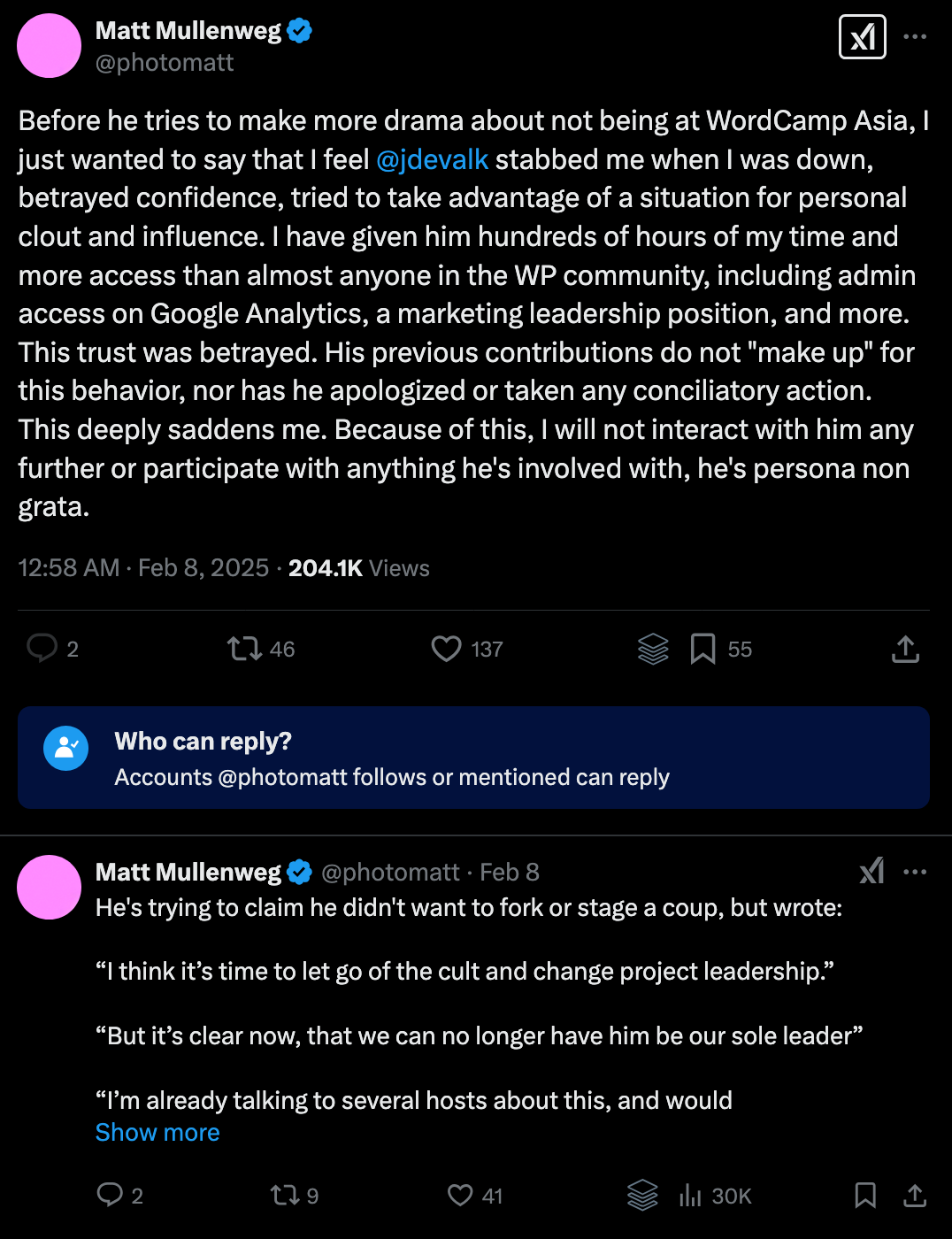
De Valk Banned from WordCamp Asia Amid Leadership Tension
The tension stems from de Valk’s December call to reform WordPress’s governance structure and end Mullenweg’s role as “Benevolent Dictator for Life.” Progress Planner, a product from de Valk’s investment firm, has also been barred from sponsoring major WordCamps.
Automattic’s presence at the event has notably increased, with 30% of speakers being Automatticians – up from 19% last year. This level of representation exceeds even what Salesforce maintains at their own Dreamforce events.
This comes as the foundation expands its protected marks to include “Hosted WordPress” and “Managed WordPress,” with trademark applications filed across multiple jurisdictions. While some applications face procedural hurdles, the UK has already registered “Hosted WordPress.”
Last year’s program sparked meaningful connections, with one participant even beginning to contribute to WordPress Core after their conversation. Sessions run throughout February 14th, offering both morning and afternoon slots.
That’s all for this week’s roundup. It’s clear we’re witnessing a pivotal moment in WordPress’s evolution, with questions about governance, representation, and trademark enforcement taking center stage. Yet initiatives like the Human Library remind us of the community’s enduring strength – its people.
These discussions aren’t just about policies or personalities; they’re about shaping WordPress’s future. As these stories develop, we’ll keep bringing you the context and insights you need.
Plus: PressConf speaker lineup grows, and uncovered WordPress Foundation documents reveal original governance plans…
Hey WordPress enthusiasts! Welcome to another packed issue of WPMore. We have some fascinating WordPress ecosystem developments to share with you today (with more WP resources).
Let’s dive in —
Thanks for reading WPMore!! Subscribe for free to receive new posts and support my work.
Matt Mullenweg Bolsters Legal Team in WP Engine Battle
The addition of Gibson Dunn – a firm that’s handled major cases like Bush v. Gore and Apple v. Samsung – signals that Matt and Automattic are reinforcing their position. While their original legal team from Hogan Lovells US LLP may still be involved, this move suggests they’re preparing for an intense legal battle ahead.
Some encouraging news from the State of Enterprise WordPress Survey 2024. The second annual report shows major brands like Amnesty International, The Times, and Princeton University are leveraging WordPress at scale. With insights from over 100 large organizations, the survey provides a comprehensive look at how enterprises are using WordPress to drive their business goals.
This level of enterprise adoption demonstrates WordPress’s continued evolution from a blogging platform to a robust enterprise solution. → Read the full report here.
This conference promises candid discussions about WordPress’s direction, particularly timely given the recent debates about WordPress Foundation governance sparked by the surfacing of its founding documents. Speaking of which…
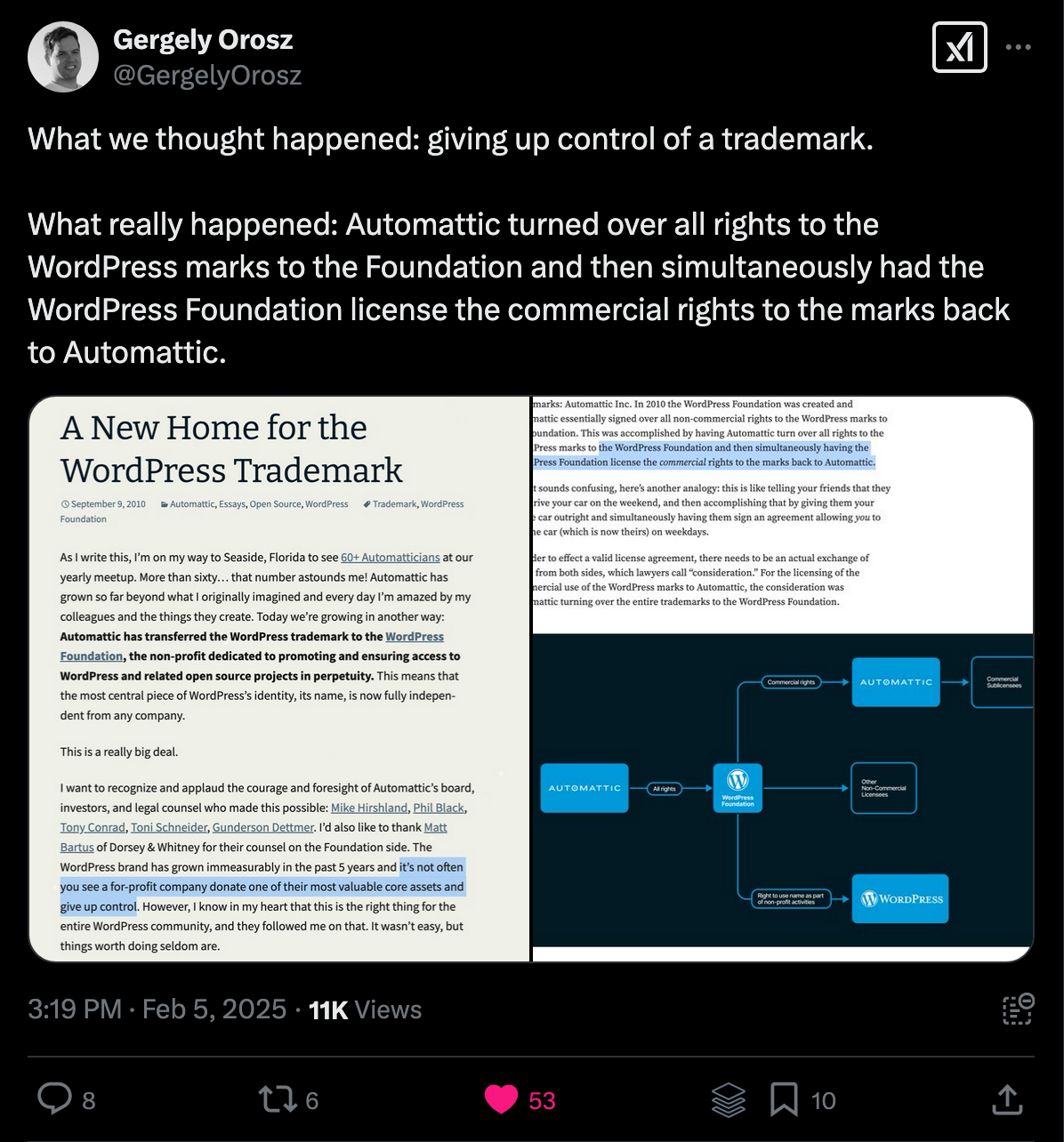
The revelation has sparked community discussion, especially given the current dynamics between WordPress’s commercial and community aspects. While some see this as merely historical context, others view it as an opportunity to revisit conversations about WordPress’s governance structure.
WordPress.com Says Goodbye to Calypso Admin Interface
For those unfamiliar, Calypso has been WordPress.com’s signature admin interface for years, offering a modern, JavaScript-based experience that set it apart from traditional WordPress installations. The interface was launched in 2015 as part of Automattic’s efforts to modernize the WordPress.com experience.
This move raises interesting questions about the future direction of WordPress.com and its relationship with the broader WordPress ecosystem. It could signal a strategy to align WordPress.com more closely with the core WordPress experience, potentially making it easier for users to transition between hosted and self-hosted solutions.
For WordPress.com users, this transition will mean adapting to a different interface and workflow. We’ll be keeping an eye on how this change impacts the WordPress.com user base and what it might mean for the platform’s future development direction.
[Note: This development is particularly interesting given Calypso’s role in WordPress.com’s historical differentiation strategy. What are your thoughts on this change? Hit reply to share your perspective.]
→ Should You Still Use WordPress? – Last year was an interesting year for the CMS. WordPress Veteran Alex Moss discusses whether you should still use it or not. Spoiler: YES!
→ Introducing PootleWriter: Your Friction-Free WordPress Writing Companion – Jamie Marsland from WordPress Youtube, released a disctraction free writing tool. It’s an amazing tool that helps you write and publish to your WordPress website without any hassle. Great tool for writers, who don’t like the default writing dashboard of WordPress.
That’s all for this issue! Next week, we’ll be back with more WordPress news and resources.
What are your thoughts on these developments? Drop me a line – I’d love to hear your perspective.
Stay WordPress-curious!
Editor’s Note: We aim to provide balanced coverage of ongoing situations. All legal proceedings and governance discussions are reported based on publicly available information.
Thanks for reading WPMore!! Subscribe for free to receive new posts and support my work.
Inside: Developer fights back, Post Status becomes non-profit and slash price, and WordPress scholarship for community members
Hey WordPress friends,
There were lots of things that happened after the last email in the WordPress community. In this newsletter, we are covering why a developer is joining the legal battle against Matt Mullenweg, Why post status is becoming a non-profit, and an update from Gutenberg & on the latest WordCamp scholarship. We also feature some WordPress tips and tutorials you might want to check out.
Let’s dive in —
Thanks for reading WPMore!! Subscribe for free to receive new posts and support my work.
Community in Turmoil: Developer Seeks Intervention in WordPress Lawsuit
The conflict has escalated beyond Automattic and WP Engine. Michael Willman, a web developer, has filed a motion to intervene in the legal battle, claiming significant personal and professional harm.
– Cancellation of a $14,500 website development contract
– Loss of an ongoing eCommerce partnership
– Forced relocation of his family into a travel trailer
He’s proposing the creation of a WordPress Governance Oversight Board to protect the community’s interests during this turbulent period. Read more on this from “The Repository”.
– Creating a board with Juliette Reinders Folmer and Karim Marucchi
– Plans to reduce membership prices
– Leveraging Slack’s 85% non-profit discount
– Retaining Michelle Frechette as Executive Director
– Maintaining a community space for open WordPress discussions
– Preserving the platform’s legacy of free-flowing conversations
The move aims to enshrine community freedoms while ensuring Post Status remains a neutral, safe space for WordPress professionals to share ideas, business insights, and community perspectives. Read his detailed blog announcement.
Bright Spot: WordCamp Asia 2025 Scholarships Highlight Community Resilience
Automattic Cuts Weekly Contributor Hours to WordPress.org by 99% – Community Members Fear ‘Beginning of the End’ (WP Shout)
The WordPress ecosystem stands at a critical crossroads. Legal battles, development hour cuts, and community reshuffling suggest significant changes are coming. Whether this is a temporary storm or a fundamental shift remains to be seen.
Stay informed, stay engaged, and keep building.
Thanks for reading WPMore!! Subscribe for free to receive new posts and support my work.
2025 is off to a dramatic start for WordPress! This week, we dive into Automattic’s reduced contributions, Mullenweg’s fork proposal, and the sudden end of the Sustainability Team. Don’t miss this!
Hey, WordPressians!
The first weeks of 2025 are bringing seismic shifts to the WordPress ecosystem. Today’s issue covers three interconnected developments that could reshape WordPress’s future. From Automattic’s dramatic scaling back of contributions to heated debates about project leadership and the unexpected dissolution of key community initiatives, we’re witnessing perhaps the most significant transformation in WordPress’s governance since its inception.
Thanks for reading WPMore!! Subscribe for free to receive new posts and support my work.
Automattic Scales Back: A New Chapter in WordPress Development
The company’s Dotorg employees have ceased work on core WordPress projects, including Gutenberg, Playground, Openverse, and WordPress.org. Instead, they’re shifting focus to Automattic’s commercial products like WordPress.com, Pressable, WordPress VIP, Jetpack, and WooCommerce.
What’s particularly interesting is how this reshapes the contribution landscape. Looking at the current Five for the Future numbers, we’re seeing rtCamp emerge as the new leading contributor with 454 weekly hours, followed by Multidots and GoDaddy. This marks a significant shift in WordPress’s development dynamics.
What This Means for WordPress’s Future
The reduction in Automattic’s involvement raises several critical questions:
How will WordPress 6.8 and future releases be managed?
What roles will Automattic’s key personnel, including Executive Director Mary Hubbard, play going forward?
How will the broader WordPress community step up to fill the contribution gap?
With legal proceedings expected to continue at least through June 2025, these changes might shape WordPress’s development landscape for the foreseeable future.
In a detailed blog post in the official WordPress.org blog, Mullenweg frames forking as a healthy exercise for open source projects, seeing it as an opportunity to experiment with different governance models and technical approaches. He specifically addresses the possibility of what he playfully dubbed “JKPress” – a potential fork led by de Valk and Karim Marucchi.
In a decisive move, Mullenweg has deactivated the WordPress.org accounts of several prominent community members, including de Valk, Marucchi, Se Reed, Heather Burns, and Morten Rand-Hendriksen, encouraging them to pursue their alternative vision.
Mullenweg remains committed to WordPress’s development, pledging to work on version 6.8 during his evenings and weekends. He’s even proposed a WordPress + JKPress summit for January 2026 in NYC to evaluate both projects’ progress.
The account deactivations extend beyond just de Valk and Marucchi. Three additional community members had their accounts deactivated:
Sé Reed, who heads the newly formed WP Community Collective non-profit
Heather Burns, who hasn’t been involved with the project since 2020
Morten Rand-Hendriksen, who along with Burns, had previously raised concerns about WordPress governance
These deactivations effectively prevent these individuals from contributing to WordPress.org, though the project’s presence on GitHub means the code remains accessible to all.
One of the affected members, Heather Burns, revealed she hasn’t been involved with WordPress for nearly five years.In a detailed personal blog post, Burns explained that she retired from WordPress and open source involvement in February 2020, making the account deactivation particularly puzzling.
Burns strongly denies any involvement in fork planning efforts, stating she has no contact with the other named individuals. She characterizes the deactivations as part of a pattern of community management issues that originally led to her departure from the project.
Despite the tensions, Mullenweg has maintained an apparently open stance toward potential forks, suggesting they could even merge successful innovations back into WordPress – a sentiment that highlights open source’s collaborative potential, even amid governance disputes.
The incident raises important questions about communication, governance, and conflict resolution within the WordPress ecosystem. As one of the web’s most crucial open-source projects, these developments could have lasting implications for WordPress’s community structure and leadership model.
Mullenweg Dissolves WordPress Sustainability Team, Sparking Community Backlash
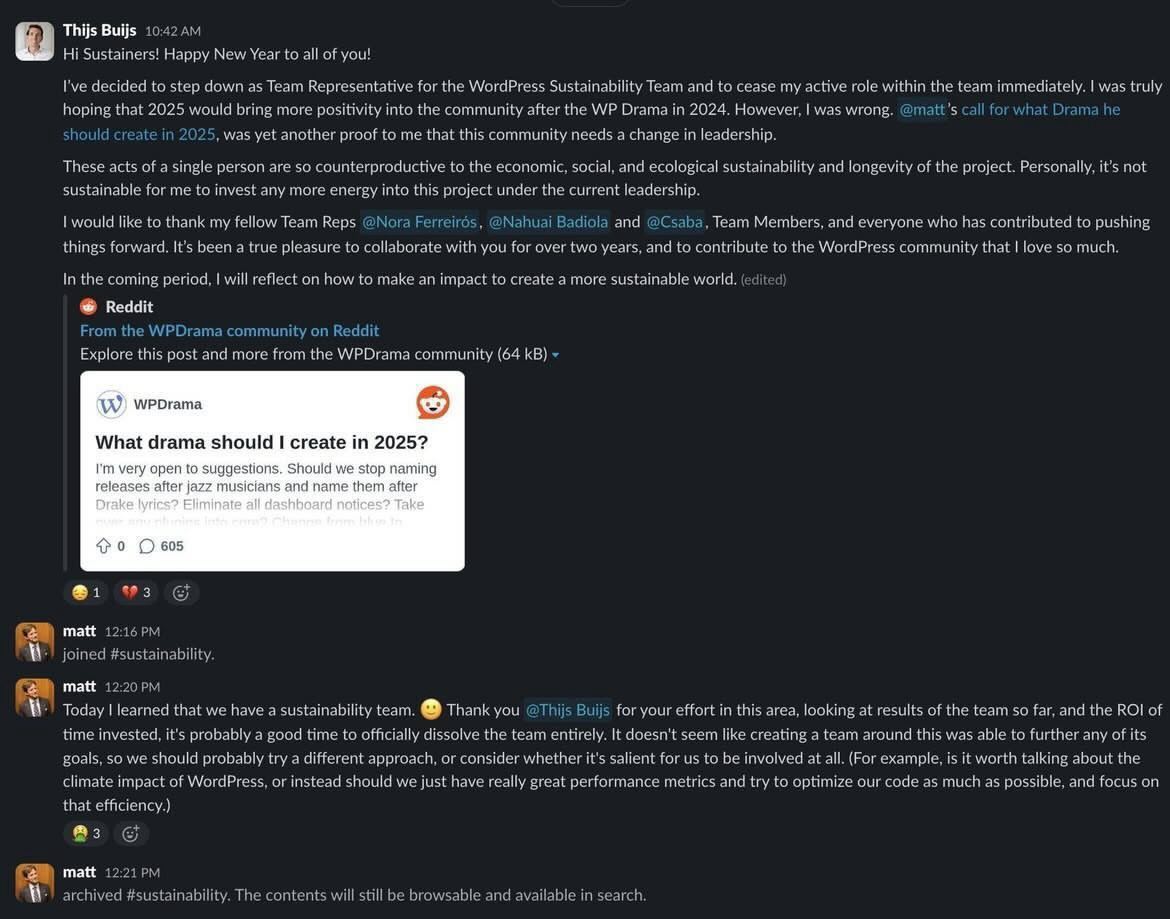
Also from This week, the WordPress community was rocked by the sudden dissolution of the WordPress Sustainability Team, a move that has ignited widespread criticism and disappointment. The decision, made by WordPress co-founder Matt Mullenweg, came shortly after team representative Thijs Buijs announced his resignation in the Making WordPress Slack channel.
Buijs cited a recent Reddit thread created by Mullenweg as a key reason for his departure. In the thread, Mullenweg had asked for suggestions to create “WordPress drama” in 2025—a move Buijs described as counterproductive to the community’s goals of fostering positivity and sustainability.
“These acts of a single person are so counterproductive to the economic, social, and ecological sustainability and longevity of the project,” Buijs wrote. “Personally, it’s not sustainable for me to invest any more energy into this project under the current leadership.”
Just 90 minutes after Buijs’ resignation, Mullenweg entered the #sustainability Slack channel and announced the team’s disbandment, stating, “Today I learned that we have a sustainability team.” He questioned the team’s return on investment and suggested focusing on performance metrics and code optimization instead.
The WordPress Sustainability Team was born out of a conversation at WordCamp Europe 2022, where UX/UI designer Nora Ferreirós raised concerns about sustainability within the WordPress ecosystem. The team officially became part of the Make WordPress initiative at WordCamp Europe 2023, with Ferreirós, Thijs Buijs, Csaba Varszegi, and Nahuai Badiola serving as its founding representatives.
Their mission was clear: to embed sustainable practices into the WordPress community, ensuring its social, economic, and environmental longevity. Over the past 18 months, the team worked on several key initiatives, including the Sustainable Events Handbook, a guide to help WordCamp organizers host more eco-friendly events. They were also developing a plugin to help website owners estimate their site’s carbon footprint.
While Mullenweg’s decision has cast a shadow over these initiatives, the passion and dedication of the WordPress community suggest that the conversation around sustainability is far from over.
What’s Next for WordPress?
As we wrap up this week’s coverage, it’s clear that WordPress stands at a crossroads. The combined impact of Automattic’s reduced involvement, the possibility of a significant fork, and the dissolution of community-led initiatives signals a period of profound change.
These developments raise crucial questions about WordPress’s future:
– How will the development process adapt to Automattic’s reduced involvement?
– Could a fork actually strengthen the WordPress ecosystem by encouraging innovation?
– What happens to sustainability initiatives in open source when leadership and community vision diverge?
Until then, keep building amazing things with WordPress!
P.S. Have thoughts about these developments? Hit reply to share your perspective, or join our discussion on Substack comment. Your insights help shape our coverage.
Best regards,
WPMore Team
Thanks for reading WPMore!! Subscribe for free to receive new posts and support my work.